
Do You Really Need a Permit to Replace an Existing Fence in Ballwin, MO?
Talk Through Your Wall's Condition
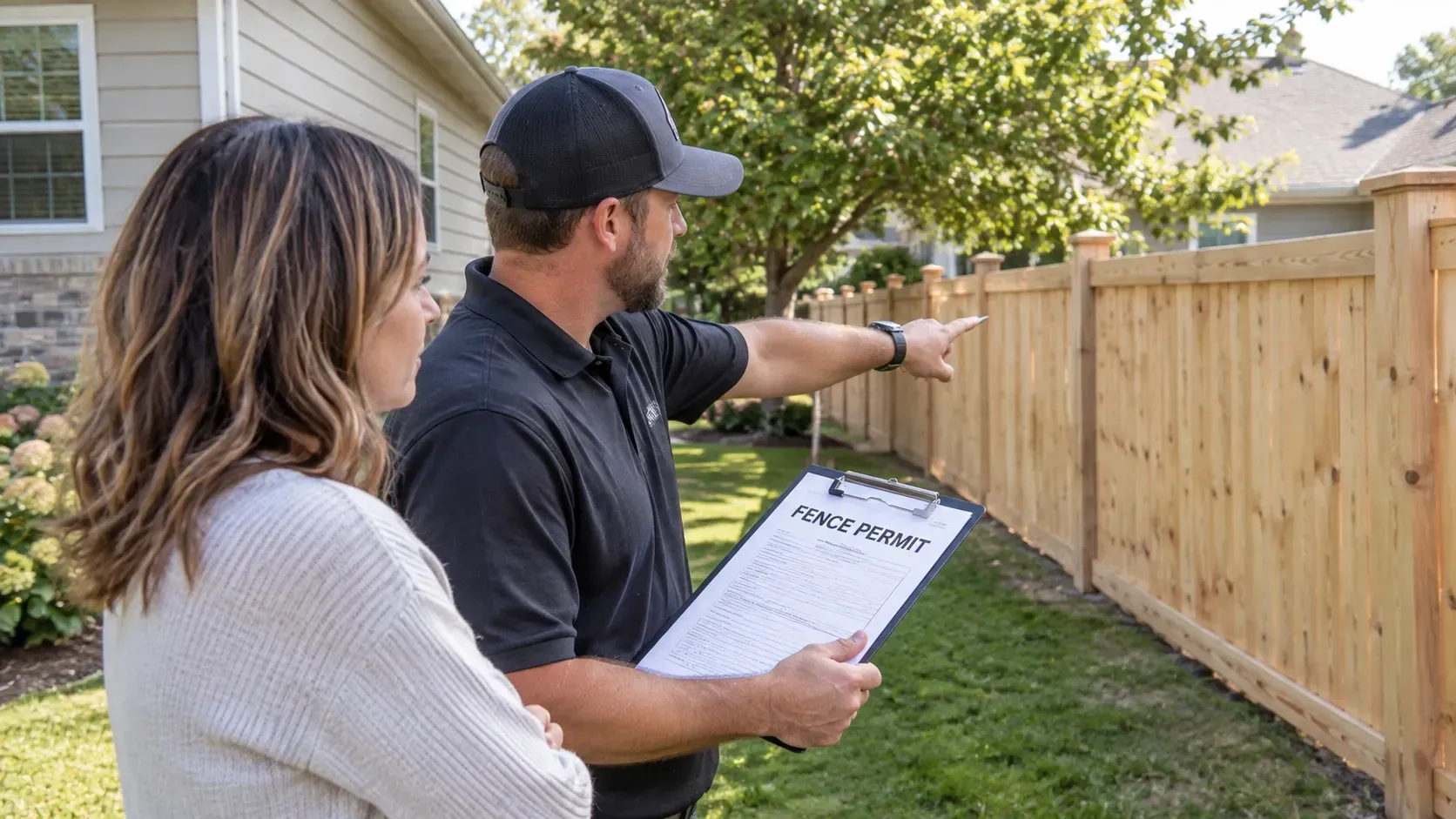
Table of Contents
- Introduction
- Why an Existing Fence Does Not Exempt the New One
- What a Fence Replacement Permit Review Actually Checks
- The Property Line Problem Nobody Expects
- Where the Old Fence Sat Is Not Always Where It Belonged
- Three Approvals That Are Not the Municipal Permit
- How to Get a Straight Answer From Ballwin
- Conclusion
- Let Us Confirm the Requirements Before We Build
- Frequently Asked Questions
Key Takeaways
- Permission was granted to a structure that no longer exists, so it does not transfer.
- Replacement exemptions usually exist but come with conditions people fail without knowing.
- The old fence is not evidence of where your property line runs.
- Old post holes are disturbed soil and the worst place to set a new post.
- The HOA, the easement holder and your neighbor are three separate conversations.
Introduction
Usually yes, because a fence replacement permit attaches to the structure you are putting up and to where it sits, not to the fence that stood there before, which is the same logic behind the corner lot rules we get asked about in Chesterfield.
We hear "but there's already a fence there" on nearly every replacement quote. It feels like it should settle the question. It almost never does.
Why an Existing Fence Does Not Exempt the New One
The mental model is reasonable. It is also wrong, and it helps to see why.
Homeowners think of a permit as permission for a change, so no change means nothing to approve. Municipalities think of it as permission for a specific structure, built to a specific spec, in a specific place. When you take the old fence out, whatever permission it carried goes into the skip with it. What you are proposing is a new structure, and it gets looked at on today's terms.
Two things follow from that:
- Codes move. A fence approved in 1994 was approved under the 1994 ordinance. Nothing about that approval binds the version of the code in force when you rebuild.
- The old fence may never have been permitted at all. A surprising share of suburban fences went up without anybody filing anything, which means there is no prior approval to point at even in principle.
Plenty of towns do have exemptions for repair or replacement, and that is worth asking about. They tend to come with conditions attached: same location, same height, same materials, or only a portion of the run being replaced. Those conditions are exactly where people come unstuck, because repairing twenty feet of a damaged run often qualifies while tearing out the whole line and starting again does not.
We are not going to print Ballwin's fence replacement permit rule here. We work across eight municipalities and the answers genuinely differ between them, so a line in a blog post is worth less than a five-minute phone call. Section six covers how to make that call.
What a Fence Replacement Permit Review Actually Checks
Knowing what the reviewer is looking at makes the process much less mysterious.
As our own fencing page puts it, height, placement, setbacks and corner-lot visibility all vary by municipality, and those four are the backbone of most reviews:
- Height, which usually differs depending on which yard the fence runs through
- Placement relative to property lines and required setbacks
- Corner-lot visibility, the sight triangle question, if any part of your fence approaches an intersection or a driveway
- Which side faces out, since some ordinances require the finished face toward the street or the neighbor
- Materials, which a few jurisdictions restrict in front yards
- Easements, because a permanent structure inside one is usually not allowed regardless of everything else
And one that changes the whole conversation when it applies: if the fence encloses a pool, it is not just a fence, it is a safety barrier. Pool barrier requirements are separate, stricter, and cover gate hardware, self-closing and self-latching mechanisms, latch height and gaps at the bottom. If there is a pool inside the line, say so on the first call, because it changes what you are allowed to build.
The Property Line Problem Nobody Expects
The permit is the cheap problem. The boundary is the expensive one.
Fences cause more boundary disputes than anything else people build, for an obvious reason: a fence is a physical, visible, permanent-looking claim about where the line runs. Once it is up, it reads as the answer even when it is not.
Here is the part that matters. The old fence is not evidence. It is a decision somebody made decades ago, possibly a neighbor, possibly a contractor who paced it off, possibly a previous owner who put it where the ground was easiest to dig. It was never a survey, and nothing about its age makes it correct.
What actually establishes the line:
- Survey pins at the corners, which are often present but buried under years of turf
- A recorded plat for the subdivision
- A current survey, which costs a fraction of what moving a finished fence costs
There is a further wrinkle worth knowing about rather than relying on. Long-standing fence lines can acquire legal significance in certain circumstances, which is a doctrine of Missouri real estate law and absolutely not something a fence contractor should be advising you on. If there is any real disagreement about where the line runs, that is a conversation with a Missouri real estate attorney before anybody orders posts.
The practical version is simpler. Talk to your neighbor before the materials are delivered, not after the holes are dug.
Where the Old Fence Sat Is Not Always Where It Belonged
The temptation on a replacement is to drop new posts into the old holes. It is faster, it is cheaper, and it is sometimes a mistake.
Reasons the old alignment may not be the right one:
- It may sit over the line, which you have now rebuilt and made permanent
- It may sit inside a utility or drainage easement, where a permanent structure is generally not permitted
- The grade may have changed since it went in, through landscaping, a patio, or years of settling
- A drainage swale may have been cut across the run, and a fence that blocks or redirects water creates a new problem with the neighbor downhill
- The neighbor may have built it, in which case it is their fence and not yours to remove
There is a construction reason too, and this one is ours rather than the city's. Old post holes are disturbed soil. Backfill that has been dug once never compacts back to what the surrounding ground is, so a new post set in an old hole sits in weaker material than a post set alongside it. On a windy line, that difference shows up as lean within a few seasons. When we replace a fence we would usually rather set fresh holes than reuse tired ones, and that decision is easier to make before anybody has quoted it as a simple swap.
One more that is not optional anywhere: call 811 before you dig. It is free, it is the law in Missouri, and the markings expire, so it gets called when the work is actually about to start rather than a month ahead. Hitting a gas or fiber line on a fence job is a genuinely bad day, and it happens on replacements precisely because people assume the ground was already cleared once.
Three Approvals That Are Not the Municipal Permit
Getting the permit does not mean you are clear. Three other parties can say no.
Your HOA or subdivision trustees. Frequently stricter than the city, and they can dictate material, color, height, style and placement. Many subdivisions require a submission with a plat drawing before any work starts. The governing document is the recorded indenture, and most homeowners have never read theirs. If you are in a subdivision with an active board, their approval is the one most likely to delay you.
The easement holder. You can own the land and still not be allowed to build on it. A utility with a recorded easement across the back of your lot can generally require removal of anything you put in it, and will not be paying for the privilege. This catches people on rear lot lines more than anywhere else, which is exactly where privacy fences want to run.
Your neighbor. Not a legal requirement, and still the approval that prevents the most grief. A ten-minute conversation about where the line runs and which way the finished side faces heads off the overwhelming majority of post-installation arguments. Our towns are small enough that this matters, whether you are in Ballwin, Chesterfield or Kirkwood.
How to Get a Straight Answer From Ballwin
Twenty minutes of calls beats any amount of reading, including this article.
Call the municipal building or planning department for the address. Not the county, not a neighbor who did theirs two years ago, and not a search result about a different town. On the edges of these municipalities, the city your mailing address suggests is not always the one with jurisdiction, so confirm that first.
Ask these, in roughly this order:
- Does replacing an existing fence require a permit here?
- If it goes back in the same location at the same height, does that change the answer?
- What do you need to see on the site plan?
- Is my lot treated as a corner lot under the code?
- Are there sight triangle requirements where my fence meets the street or driveway?
- What are the height maximums, and do they differ by yard?
- Is there a finished-side requirement?
- Do your records show an easement on this parcel?
- Is there a pool inside the fence line, and does that change the requirements?
Have ready before you call: the address and parcel number, a plat or survey if you have one, photographs of the existing fence, and the proposed height and material.
Then get it in writing. A friendly verbal yes from whoever answered the phone is not much use six months later when somebody asks. Either take the permit or get the exemption confirmed in an email. The same thinking applies to setbacks and easements on any permanent structure, not just fences.
Conclusion
Treat a fence replacement permit as paperwork for a new build that happens to have something standing in the way, because that is how the city will treat it. Make the calls before you pick materials, find your pins before you set posts, and tell your neighbor what is happening before the truck arrives. Done in that order it is a dull, cheap process. Done in the other order it is the most expensive fence on the street.
Let Us Confirm the Requirements Before We Build
Every project here starts with a free consultation at your property and an honest assessment with no obligation. We will walk the line with you, flag what needs confirming with your municipality before we quote, and tell you exactly what to ask. Buerck Wallscapes is a locally owned hardscaping contractor in Wentzville, fully licensed and bonded, covering Wentzville, Ballwin, Chesterfield, Creve Coeur, Ladue, Wildwood, Kirkwood and Lake St. Louis across St. Charles County and west St. Louis County. Satisfaction guaranteed, and if something falls short we will work to make it right. For
fence work call (636) 332-1836, email greg@buerckstl.com, or
talk it over with us. We are here Monday to Saturday, 8am to 5pm.
Frequently Asked Questions
Do I need a permit to replace an existing fence?
Usually yes. The requirement attaches to the new structure and its location rather than to the fence being removed. Some towns offer replacement exemptions with conditions attached, so confirm with the municipality that covers your address.
Does replacing a fence in the same spot avoid a permit?
Not reliably. Where exemptions exist they often require the same location, height and materials, and sometimes only cover partial repairs rather than a full rebuild. Ask the city specifically about a full replacement.
Can I rely on the old fence to show my property line?
No. The old fence reflects a decision somebody made decades ago, not a survey. Find the survey pins or the recorded plat before rebuilding, because a fence makes a boundary assumption permanent and visible.
Does my HOA approval replace the city permit?
No, they are separate. The subdivision indenture and the municipal code are different sets of rules with different approvers, and HOA requirements are frequently stricter on material, height and color.
Do I need to call 811 for fence posts?
Yes. Utility locates are required in Missouri before digging, they are free, and the markings expire. Call when the work is about to start rather than weeks ahead.