
Can You Be Held Liable If Your Retaining Wall Collapses Onto a Neighbor's Property in Lake St. Louis, MO?
Talk Through Your Wall's Condition
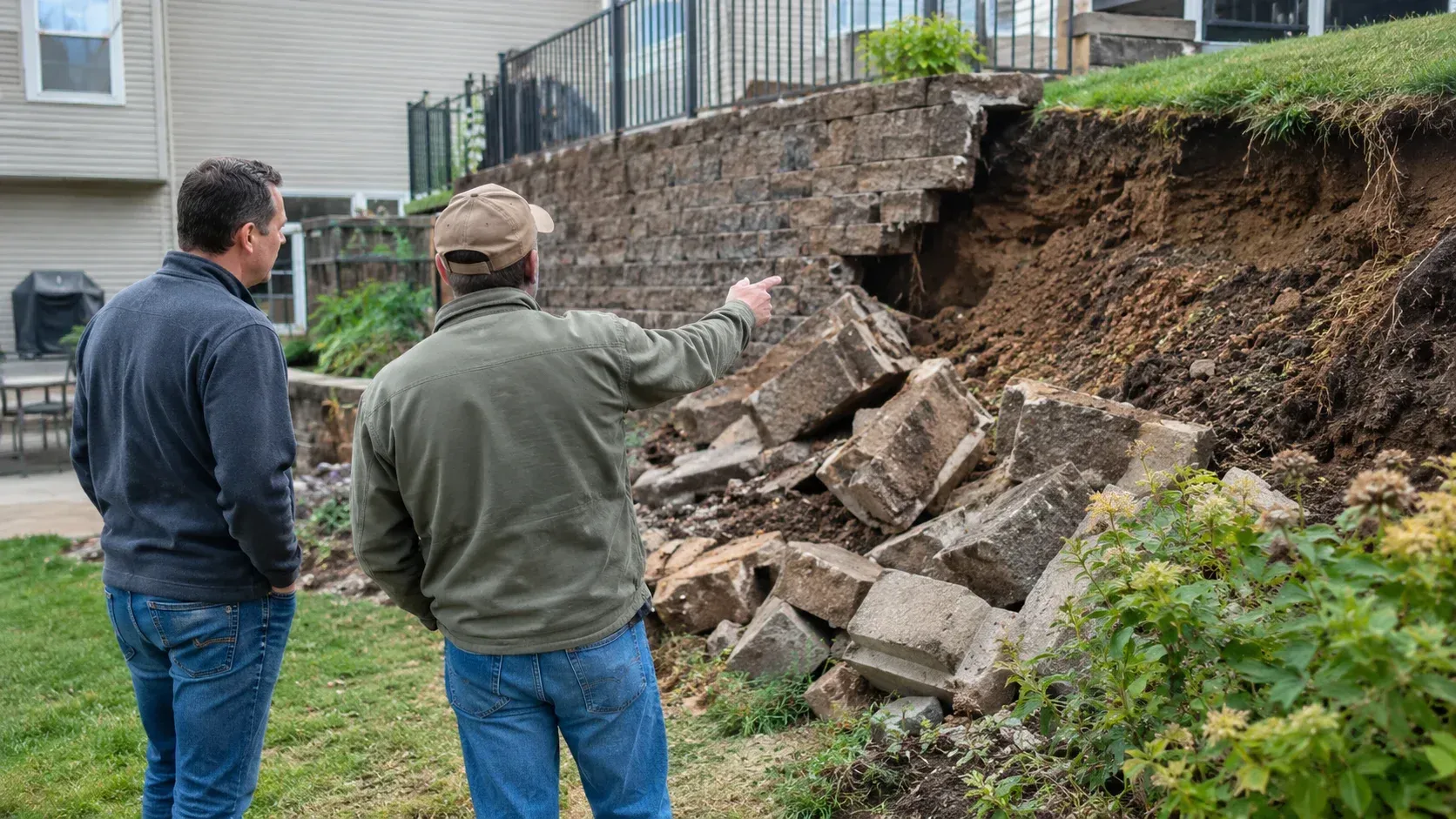
Table of Contents
- Introduction
- Who Owns the Wall, and Who Is Responsible for It?
- What Liability Usually Turns On
- When the Wall Sits On or Near the Property Line
- Where Insurance Fits In
- What to Do If Your Wall Is Leaning Toward a Neighbor
- Conclusion
- Talk Through Your Wall Before It Becomes a Dispute
- Legal Disclaimer
- Frequently Asked Questions
Key Takeaways
- A property owner is generally responsible for a retaining wall on their land, including damage it causes when it fails.
- Responsibility usually turns on whether the owner knew, or should have known, that the wall was in trouble.
- Find out where the wall actually sits before assuming it is yours or your neighbor's. A plat or survey settles it.
- A documented repair history is one of the most useful things a homeowner can have if a dispute starts.
- A leaning wall is a problem you can still get ahead of. A collapsed one is a problem you negotiate.
Introduction
In Missouri, a property owner is generally responsible for a retaining wall on their own land, and can be held liable for damage or injury if a poorly maintained or failed wall causes harm to a neighbor. That is the general principle behind most of these disputes, and it is why a retaining wall built to hold the slope rather than just dress it up is worth more than it looks on an invoice.
The uncomfortable part is what follows. A retaining wall collapse rarely happens without warning, which means the question after the fact is usually not whether the wall failed but how long it had been telling you it was going to.
Who Owns the Wall, and Who Is Responsible for It?
Start with location, not assumption.
A retaining wall usually belongs to whoever owns the ground it stands on. On a sloped lot in Lake St. Louis, that is often the uphill owner, since the wall is holding their soil back. Not always, though. Walls get built where the grade demands, not where the survey line is convenient.
Three documents usually answer the question:
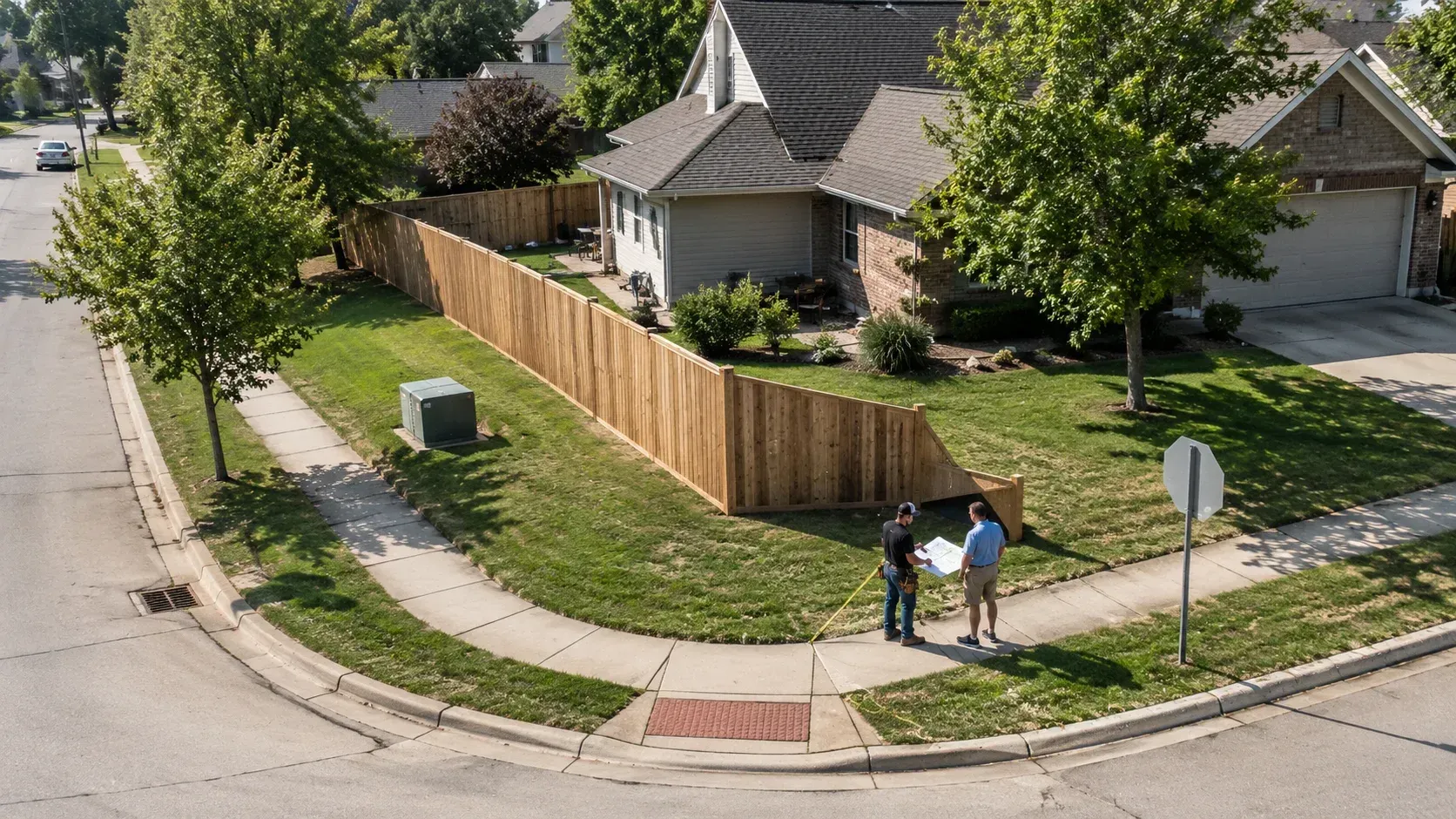
- Your plat or survey. This is the one that matters most. It shows where the line actually runs.
- Your title documents. These may show an easement, a shared maintenance obligation, or a recorded agreement from a previous owner.
- HOA or subdivision records. Some neighborhoods have their own rules about walls, and those sit separately from anything the city requires.
If you bought the house with the wall already in place, you generally inherited the wall and its condition. A failure that was building for a decade does not become the previous owner's problem because they left.
What Liability Usually Turns On
Retaining wall liability is rarely about the collapse itself. It is about what the owner knew beforehand.
Most of these disputes come down to a few questions:
- Was the wall showing visible signs of distress before it came down?
- Did anyone tell the owner about it, in writing or otherwise?
- Was anything done after that?
- Did the owner add load behind the wall, such as fill, a vehicle, or a new structure?
- Was the wall built or modified without the permits or engineering the job called for?
An owner who had a wall assessed, acted on the recommendation, and still had it fail is in a very different position from one who watched it lean for three summers. That is the practical meaning of responsibility here, and it is why knowing what actually makes a retaining wall fail is not only a maintenance question.
Missouri clay, freeze and thaw cycles, and poor drainage do most of the damage. None of that transfers responsibility away from the property. Weather is expected here.
When the Wall Sits On or Near the Property Line
This is where a straightforward question gets complicated, and it is the point at which most homeowners should stop reading articles and call an attorney.
A few situations change the picture:
- The wall straddles the line. Shared ownership and shared maintenance may apply, and the terms may already be recorded.
- There is an easement. The wall may sit on one owner's land while another has rights or duties relating to it.
- A previous owner built it in the wrong place. That history can matter, and it is worth finding.
- The wall supports a shared driveway or a common area. The HOA may be a party to the conversation.
None of this is something to work out over the fence. Get a survey, gather what you have in writing, and get advice specific to your lot.
Where Insurance Fits In
Call your insurer before you need to. Do not wait for a retaining wall collapse to find out how your policy treats one.
Homeowners policies vary considerably in how they handle retaining walls, and claims after a failure are often contested on the grounds that the damage developed gradually rather than suddenly. Earth movement and maintenance related deterioration are common sticking points.
What is worth asking your agent now:
- Is the retaining wall covered at all under my policy, and under what circumstances?
- How is a gradual failure treated compared with a sudden event?
- Would damage to a neighbor's property be handled under liability coverage?
- Does anything change if the wall was built without permits?
Write down the answers. An agent's verbal summary is not a policy, and the time to find the gap is while the wall is still standing.
What to Do If Your Wall Is Leaning Toward a Neighbor
If the wall is already moving, the order of operations matters.
- Photograph it now, with dates. Then again every few weeks. A record of movement is useful whichever way the conversation goes.
- Get a professional assessment. The cause determines the fix, and guessing wastes money.
- Tell your neighbor. Awkward, but far better than the alternative. People respond very differently to a warning than to a surprise.
- Keep everything in writing. Quotes, assessments, texts, and what you decided to do.
- Act on what you are told. Documented inaction is worse than no documentation at all.
- Keep weight off the top of the wall while you decide. No vehicles, no added fill, no new structures.
A wall caught early can sometimes be repaired by fixing drainage and resetting sections rather than rebuilt from the base, which is one of severalhardscape features that can often be repaired rather than replaced. The window for that closes as the wall moves.
Conclusion
A retaining wall collapse onto a neighbor's property is expensive in every direction, and the ownership question is usually less interesting than the maintenance record behind it. If the wall is on your land, treat it as yours. Learn where the line runs, find out what your policy actually covers, and take a leaning wall seriously the first season it leans rather than the third. That is the version of this problem you can still control.
Talk Through Your Wall Before It Becomes a Dispute
If a wall on your property is leaning, bulging, or pushing soil onto a neighbor's side, the first step is finding out what is driving it. Buerck Wallscapes offers free, no obligation consultations, and you can have someone look at the wall with you or call Greg at (636) 332-1836, Monday through Saturday. New wall construction and retaining wall in Lake St. Louis start the same way.
Legal Disclaimer
This article is general information about how responsibility for retaining walls is commonly understood, and it is not legal advice. It does not describe every rule that may apply to your property, your subdivision, or your situation, and outcomes depend on facts specific to each case. For advice about your own wall, your property line, or a dispute with a neighbor, consult an attorney licensed in Missouri. For coverage questions, consult your insurance agent. Buerck Wallscapes is a hardscaping contractor, not a law firm or an insurer.
Frequently Asked Questions
Who is responsible if a retaining wall collapses onto a neighbor's yard?
Generally the owner of the land the wall sits on, especially where the wall was poorly maintained or showed warning signs that went unaddressed. Where the wall sits on or near the property line, ownership may be shared. A survey and an attorney licensed in Missouri can confirm it.
Does my neighbor have to pay if their wall damages my property?
Possibly, but it depends on who owns the wall, its condition beforehand, and what each party knew. Document the damage with dated photos, notify them in writing, and speak to your insurer and an attorney before assuming either answer.
Who owns a retaining wall on the property line?
Whoever owns the ground it stands on, which a plat or survey will show. A wall straddling the line may carry shared ownership or a recorded maintenance agreement. Check your title documents and subdivision records rather than assuming.
Does homeowners insurance cover a retaining wall collapse?
It varies by policy, and claims are often disputed when the failure developed gradually rather than suddenly. Earth movement and maintenance related deterioration are common exclusions. Ask your agent specifically how your policy treats retaining walls, and keep the answer in writing.
How do I know if my retaining wall is about to fail?
Watch for leaning away from vertical, bulging sections, stair step or vertical cracks, blocks separating or shifting, and soil or standing water at the base. Check after heavy storms and each spring, and have a professional identify the cause rather than guessing.