
Is It Legal to Install a Built-In Gas Grill Outdoor Kitchen in Wentzville, MO Without a Permit?
Talk Through Your Wall's Condition
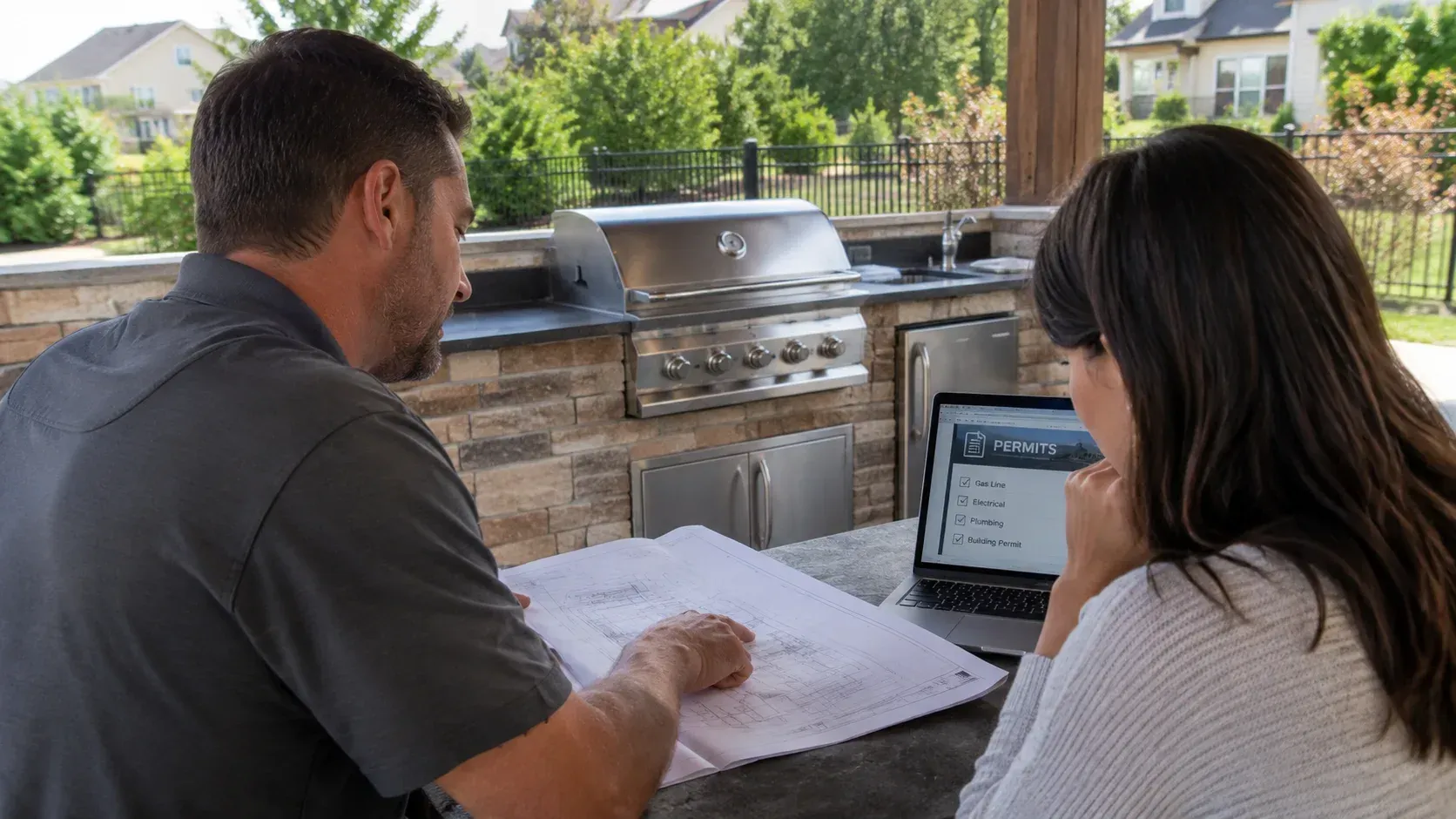
Table of Contents
- Introduction
- The short answer
- What actually triggers a permit
- The four permits that can apply to one project
- Why gas is the part you cannot shortcut
- Electrical, footings, and Missouri freeze-thaw
- Setbacks, easements, and where you cannot build
- What happens if you skip the permit
- HOA approval is a separate hurdle
- What to ask before you accept a quote
- Conclusion
- Ask for a Quote That Includes Permitting and Inspections
- Frequently Asked Questions
Key Takeaways
- A portable grill on a patio needs no permit. A built-in outdoor kitchen usually does.
- The permit is not triggered by the words "outdoor kitchen." It is triggered by the specific elements involved: a permanent gas line, an electrical circuit, a footing, plumbing, or a roof structure.
- One project can require several separate permits and inspections, because building, gas, electrical, and plumbing are usually reviewed independently.
- Gas and electrical connections belong to appropriately licensed trades. This is the part of the project where doing it informally creates real danger, not just paperwork risk.
- Unpermitted work follows the house. It surfaces at resale, at appraisal, and at claim time.
Introduction
No, a built-in gas grill outdoor kitchen in Wentzville generally cannot be installed without a permit. A portable grill you roll onto the patio needs nothing, but the moment the grill becomes built-in, the project almost always picks up at least one permit-triggering element: a permanent gas line, a dedicated electrical circuit, a structural footing, or a roof over the top. That distinction between portable and permanent is the whole answer, and it shapes how we scope every outdoor kitchen build we quote.
We are a hardscaping and outdoor construction contractor, not your municipality, so treat this as an orientation to the questions rather than a compliance ruling. Requirements differ between Wentzville, St. Charles County, and each of the other towns we serve, and they change between code editions.
Here is what generally triggers a permit, which permits can apply, and what to confirm before anyone breaks ground.
The Short Answer
For most homeowners in the Wentzville area:
- Portable grill, no permit. A freestanding unit on wheels is furniture as far as the code is concerned.
- Built-in grill in a masonry or framed island, usually a permit. The island is a structure and the appliance is permanently connected.
- Any permanent gas line, almost certainly a permit and an inspection. This is the most reliable trigger.
- Any new electrical circuit, almost certainly a permit. Outdoor receptacles carry their own requirements.
- A sink or drain, a plumbing permit. Water supply and waste both matter.
- A pergola, roof, or enclosure over the kitchen, a separate structural review. Covering a grill introduces clearance and ventilation questions.
Confirm the specifics with the City of Wentzville building or permit office before you plan around any of it. That call is free and it takes ten minutes.
What Actually Triggers a Permit
It helps to stop thinking about the project as one thing called an outdoor kitchen. Permit offices look at components.
The elements that commonly trigger review:
- A permanent fuel line, whether natural gas or a fixed propane supply
- An electrical circuit for lighting, a refrigerator, or receptacles
- A footing or foundation, particularly anything poured
- Plumbing supply or drainage
- A structure above a certain size or height, including pergolas and roofs
- Work inside a setback, easement, or floodplain
- Anything attached to the house
The elements that often do not, on their own:
- A prefabricated island that simply sits on an existing patio
- A grill fed by a portable propane cylinder
- Loose-laid pavers with no footing
- Furniture, planters, and freestanding heaters
Most real outdoor kitchens land in the first list because the appeal of a built-in is precisely the permanent gas, the lighting, and the refrigerator.
The Four Permits That Can Apply to One Project
Homeowners are often surprised that one build generates several reviews. Depending on scope, an outdoor kitchen can involve:
- Building permit, covering the structure, footing, and any roof or pergola
- Mechanical or gas permit, covering the fuel line, its sizing, and its pressure test
- Electrical permit, covering the circuit, receptacles, and fixtures
- Plumbing permit, if there is a sink, an ice maker, or a drain
Each typically carries its own inspection, and several are staged. Rough inspections happen while the work is still open and visible, and a final inspection happens at completion. That sequencing is the practical reason to permit properly from the start: an inspector cannot approve a gas line that has already been buried and covered in stone veneer without exposing it again.
Why Gas Is the Part You Cannot Shortcut
This is the section we would ask you to read even if you skip the rest.
A permanent gas line is not a plumbing convenience. It is a fuel line under pressure running through a space where people gather and where an appliance produces open flame. The elements that have to be right:
- Correct line sizing for the total BTU demand of every appliance on the run, not just the grill
- Appropriate material and burial depth for the conditions
- A pressure test before anything is concealed
- An accessible shutoff valve, so the gas can be isolated
- Clearance to combustibles per the specific grill's listing, which is why a built-in grill cannot simply be dropped into any cabinet
- Ventilation in the island itself, because an enclosed cavity around a gas appliance is a hazard
- No enclosed propane cylinder. A propane tank must never be sealed inside an airtight cabinet
Two things follow from that list. Gas and electrical connections work for appropriately licensed trades, and the built-in grill you choose comes with an installation specification that dictates the island's construction. We build the structure around what the appliance requires rather than the reverse.
Electrical, Footings, and Missouri Freeze-Thaw
On the electrical side, outdoor receptacles generally need ground-fault protection and weather-resistant covers rated for the exposure, and fixtures need to be listed for wet or damp locations. Lighting, a refrigerator, and a receptacle for small appliances all add load that should be planned rather than improvised from the nearest existing outlet.
On the structural side, this is where our own trade lives, and where we see the most avoidable failures. An outdoor kitchen island is heavy, and it sits outside through Missouri winters:
- A footing needs to bear below the frost line so the island does not heave
- Freeze-thaw cycling will find any inadequate base preparation, and it shows up as cracked veneer and separating countertops
- An island placed on an existing patio may need that section of base reworked to carry the load
- Drainage matters, because water sitting against a masonry base in winter is what damages it
An island that shifts even slightly will crack its countertop and open the joints around the grill cutout. That is why we treat the base as the real project and the finishes as what goes on top, the same way we approach patio construction and the rest of our hardscaping work.
Setbacks, Easements, and Where You Cannot Build
Location is regulated separately from construction. Before a design is finalized, these need checking against your plat:
- Setbacks from side and rear property lines, which limit how close a structure can sit
- Utility easements, where you generally cannot build a permanent structure at all. If a utility needs access, what you built in the easement can be removed at your expense
- Drainage easements, which exist to move water and cannot be obstructed
- Distance from the house, which interacts with clearance and ventilation for a grill under an eave or a covered porch
- Septic fields and laterals, which must not be built over
The plat for your property shows the easements. If you do not have it, the city or county can usually point you to it, and it is worth having in hand before the design conversation rather than after.
What Happens If You Skip the Permit
Skipping the permit does not usually cause an immediate problem. It causes a later one.
- A stop-work order, if the work is noticed while in progress
- Fines, and a requirement to permit retroactively
- Exposure work, meaning opening up finished construction so an inspector can see what is behind it
- Insurance complications. If a fire or a gas incident traces back to unpermitted, uninspected work, that becomes a conversation with your carrier you do not want
- Resale friction. Unpermitted structures surface in inspection reports and appraisals, and buyers use them as negotiating leverage or ask for removal
- Appraisal issues, since an unpermitted improvement may not count toward value
The pattern worth noticing is that most of these costs arrive years later, at the least convenient moment, and they are all larger than the permit fee would have been.
HOA Approval Is a Separate Hurdle
If your property is in a subdivision with an association, its approval is independent of the city's.
- HOA rules are private agreements, not law, but they are enforceable against you
- Requirements often cover materials, colours, heights, and screening
- Many associations require plans submitted and approved in advance
- Approval timelines can run weeks, which affects scheduling
- A city permit does not override an HOA restriction, and vice versa
Both boxes have to be ticked. We would rather know about an association at the consultation stage than discover it after materials are ordered.
What to Ask Before You Accept a Quote
Whoever you hire, these questions separate a complete quote from an optimistic one:
- Which permits does this project require, and who pulls them?
- Is permitting included in the price, or billed separately?
- Who performs the gas connection, and are they appropriately licensed for it?
- Who performs the electrical work?
- What footing detail is specified, and to what depth?
- Has the design been checked against my setbacks and easements?
- Which inspections are scheduled, and at what stages?
- What is the grill manufacturer's clearance requirement, and does the island meet it?
A contractor who answers those without hesitating is telling you something. So is one who suggests the permit is optional.
Our own consultations cover permits and material selections up front, and consultations are free. You can see completed work in our gallery, and more about how we work on our about page.
Conclusion
A portable grill needs no permit. A built-in outdoor kitchen almost always does, because the things that make it worth building, permanent gas, real lighting, a solid footing, are exactly the things codes exist to review.
The two decisions that matter most are made before any stone is set: confirm what Wentzville requires for your specific scope, and make sure the gas and electrical work is done by trades qualified to do it and inspected by someone whose job it is to check. Everything after that is construction, which is the part we are good at.
Ask for a Quote That Includes Permitting and Inspections
If you are planning an outdoor kitchen anywhere in
our service area, we are glad to walk the space and talk through scope, permits, footings, and what your chosen grill will require. Buerck Wallscapes offers free consultations and stands behind its work with a satisfaction guarantee. Call Greg at (636) 332-1836, Monday to Saturday, or
get in touch with your rough plan and the make of grill you are considering. Bring your plat if you have it, since setbacks and easements shape the design more than anything else early on.
Frequently Asked Questions
Do I need a permit for a built-in outdoor kitchen in Wentzville?
Generally yes. A permanent gas line, an electrical circuit, a footing, plumbing, or a roof structure each commonly trigger review, and most built-in kitchens include at least one. Confirm your specific scope with the City of Wentzville permit office.
Does a portable grill need a permit?
No. A freestanding grill on wheels using a portable propane cylinder is treated as an appliance rather than construction. Permit questions begin once the grill is built in and permanently connected to fuel or electricity.
Can I run the gas line to my outdoor kitchen myself?
Gas connections should be made by appropriately licensed trades and inspected before being concealed. Line sizing, pressure testing, shutoff access, and clearance to combustibles all matter, and errors here create fire and carbon monoxide risk.
What happens if I build an outdoor kitchen without a permit?
Consequences typically arrive later: fines and retroactive permitting, opening finished work for inspection, insurance complications after an incident, and problems at resale or appraisal when the structure appears in an inspection report.
Does my HOA approval replace a city permit?
No, they are separate and both may apply. HOA rules are private agreements covering things like materials and heights, while the permit is a municipal requirement. Approval from one does not satisfy the other.