
How Do You Choose the Right Paver Pattern for a Patio in St. Louis, Missouri?
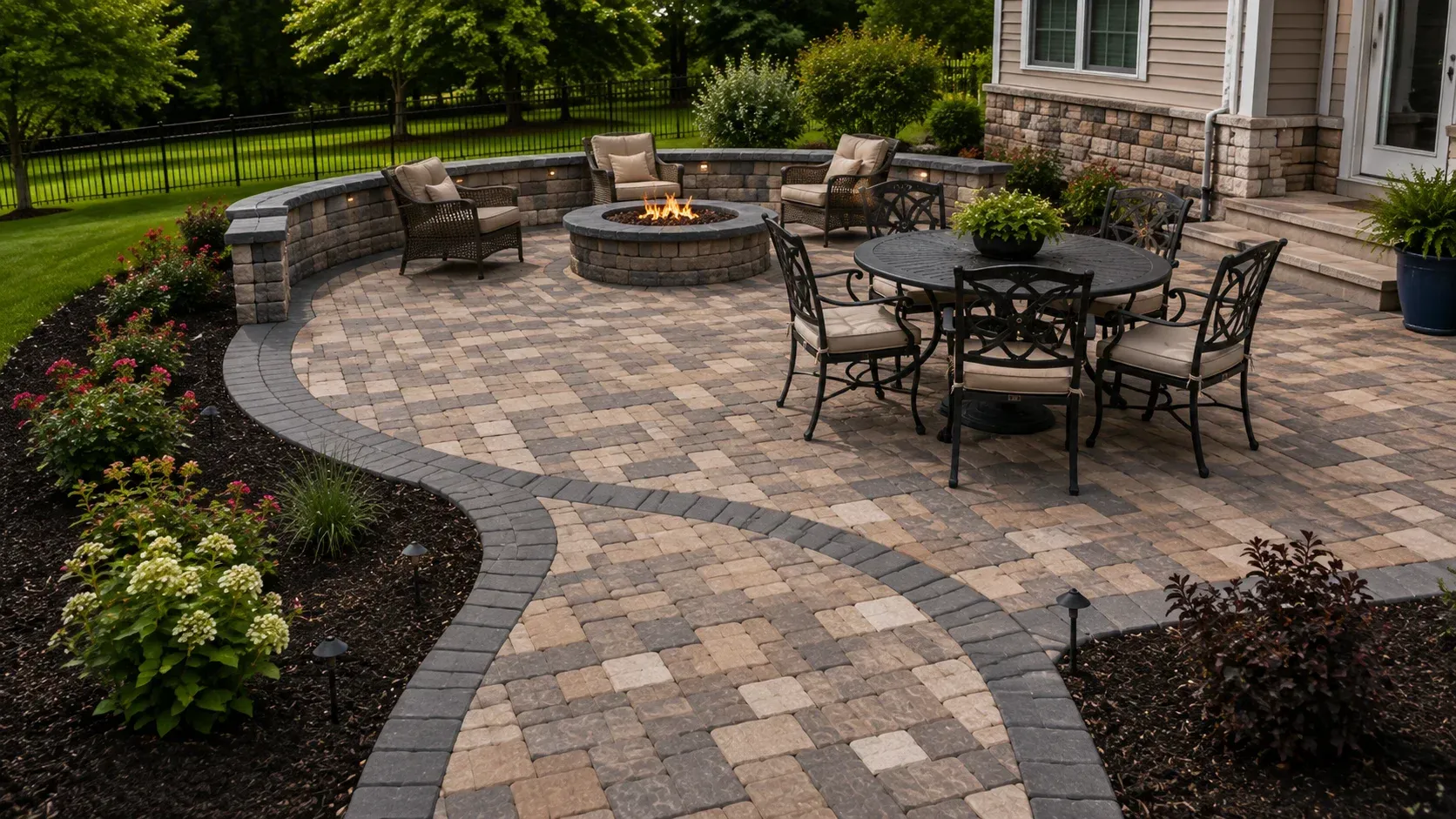
Table of Contents
- Introduction
- What a Paver Pattern Actually Does
- The Most Popular Patio Paver Patterns
- How Patio Size Affects Pattern Choice
- Matching the Pattern to Your Home's Style
- Choosing a Pattern for How You Use the Patio
- Durability and the Role of the Pattern
- Borders, Accents, and Color
- Conclusion
- Talk Through Your Options
- Frequently Asked Questions
Key Takeaways
- To choose the right paver pattern for a patio, match it to three things: the size of the space, the style of your home, and how the patio will be used day to day.
- Running bond and herringbone are the most practical patterns for most St. Louis patios because they are simple to lay and hold up under regular foot traffic.
- Herringbone resists shifting better than stacked or straight patterns, which makes it a common pick for areas that carry weight, like patios near a driveway.
- Busy patterns can overwhelm a small patio, while simple patterns can look plain on a large one, so scale the pattern to the space.
- The pattern affects appearance and some durability, but the base beneath the pavers matters more for how long the patio lasts on Missouri's clay soil.
Introduction
To choose the right paver pattern for a patio in St. Louis, start with three questions: how big is the space, what style is your home, and how will the patio be used. The answers point you toward a pattern that fits, because a pattern that suits a small courtyard often looks wrong on a large entertaining area, and one built for heavy traffic differs from one chosen purely for looks.
The pattern is one of the first choices in any paver installation, and it is hard to change later without lifting the whole surface. Getting it right at the planning stage saves money and regret.
This guide explains what each common pattern does well, where it falls short, and how patio size, home style, and daily use should steer the decision for homes around St. Louis and St. Charles County.
What a Paver Pattern Actually Does
A paver pattern is the arrangement of the units on the surface. It affects three things: how the patio looks, how well it resists shifting, and how much material is wasted in cutting.
Some patterns interlock in a way that spreads weight and resists movement. Others rely mostly on the base and edge restraint to stay put. Neither is wrong, but the difference matters for patios that carry weight or sit on a slope.
Pattern also drives cutting waste. Diagonal and angled layouts need more cuts at the edges, which raises labor and material cost compared with a straight layout.
The Most Popular Patio Paver Patterns
Running Bond
Running bond is the simplest layout. Each row is offset from the one before it, like a brick wall laid flat. It is quick to install, wastes little material, and suits almost any home. Its main limit is that it does little to resist shifting on its own, so the base and edging carry that load.
Herringbone
Herringbone sets pavers at a 45 or 90 degree angle in an interlocking zigzag. It is one of the strongest patterns because the interlock spreads weight and resists movement. That makes it a common choice for patios near driveways or anywhere with heavier use. It does need more cuts at the edges.
Basket Weave
Basket weave pairs pavers in alternating horizontal and vertical sets. It has a traditional, slightly formal look that suits older or classic homes. It is easy to lay but offers less interlock than herringbone, so it is better for lighter use areas.
Stack Bond
Stack bond lines pavers up in a straight grid. It gives a clean, modern look that works with contemporary homes. It is the weakest pattern for resisting movement, since nothing interlocks, so it depends heavily on a solid base.
Random or Ashlar
Ashlar mixes several paver sizes in a repeating but irregular looking layout. It reads as natural stone and hides minor imperfections well. The tradeoff is more planning and more cutting, which adds cost.
How Patio Size Affects Pattern Choice
Scale is one of the most common places people go wrong. A busy pattern like herringbone or ashlar can overwhelm a small patio, making it feel cramped and chaotic.
On a small patio, a simple running bond or a large format stack bond usually looks calmer and makes the space feel bigger. Larger pavers with fewer joints also read as more open.
On a large patio, the opposite is true. A plain pattern over a big area can look flat and unfinished. Herringbone, ashlar, or a running bond broken up with a border section holds interest across the space.
Matching the Pattern to Your Home's Style
The patio should feel connected to the house, not dropped next to it. The pattern is one way to make that link.
- Traditional and brick homes. Herringbone and basket weave echo the brickwork common on older St. Louis homes and settle in naturally.
- Modern and contemporary homes. Stack bond and large format running bond with tight joints suit clean lines and simple exteriors.
- Farmhouse and transitional homes. Ashlar and mixed size layouts read as natural stone and fit the relaxed look these homes tend to have.
When in doubt, pull one cue from the house, such as the brick bond or the trim style, and let it guide the pattern. This is a core idea in good patio construction: the hardscape should look like it belongs.
Choosing a Pattern for How You Use the Patio
Use matters as much as looks. A patio that mostly holds a table and chairs has different needs from one that carries foot traffic to a pool, a grill, or a driveway.
For high traffic areas or anywhere weight rolls across the surface, herringbone is the safer pick because its interlock resists rutting and shifting. For quiet seating areas, appearance can lead, so basket weave or stack bond are reasonable.
Think about furniture too. Chairs and tables sit more evenly on smaller, tighter joint patterns. Very wide joints or heavily textured pavers can make furniture wobble and are harder to keep clear of debris.
Durability and the Role of the Pattern
Pattern affects durability, but only up to a point. An interlocking pattern like herringbone genuinely resists movement better than a stacked grid. That is a real, measurable difference.
Even so, the base does most of the work. On Missouri's clay soil, which swells and shrinks with moisture and moves through freeze and thaw cycles, a poorly prepared base will fail no matter how strong the pattern is. A well built base with a strong pattern is the goal.
Edge restraint is the other quiet factor. Without it, pavers at the perimeter creep outward over time and the whole pattern loosens. Good hardscaping, whether a patio or a larger hardscaping project, treats the base and edges as seriously as the visible surface.
Borders, Accents, and Color
A border course, usually a row or two of pavers in a contrasting color set around the perimeter, frames the patio and neatens the cut edges. It is a small detail that makes almost any pattern look more finished.
Accent bands or a different pattern inset in the center can break up a large surface. Keep accents simple, since too many competing patterns make a patio feel restless.
Color choice interacts with pattern. A bold pattern in a strong color can be a lot to look at, while the same pattern in a muted earth tone reads as texture rather than noise. Blended tones also hide the dust, pollen, and water spots common through a St. Louis year.
Conclusion
Choosing the right paver pattern for a patio comes down to fitting the pattern to the space, the house, and the way the patio will be used. Running bond and stack bond keep small or modern spaces calm, herringbone handles traffic and weight, and basket weave or ashlar suit traditional and natural looks. Scale the pattern to the patio size so it neither overwhelms a small area nor leaves a large one looking flat.
It also helps to keep the pattern in perspective. It shapes appearance and adds some resistance to movement, but the base preparation and edge restraint decide how the patio holds up on local clay soil over the years. A pattern chosen with the site, the home, and honest expectations in mind gives a homeowner a clear basis for the decision.
Talk Through Your Options
If you are weighing patterns and want a second opinion that accounts for your patio size, your home's style, and your soil, a short conversation can help you narrow the field. You can get in touch with questions about your project at any point, with no pressure and no obligation. The goal is to give you clear information so you can make a decision that fits your home and budget.
Frequently Asked Questions
What is the best paver pattern for a patio?
There is no single best pattern. Running bond suits most homes and is easy to install, herringbone is strongest for traffic and weight, and basket weave or ashlar fit traditional and natural styles. The right choice depends on your patio size, home style, and how you use the space.
Which paver pattern is the most durable?
Herringbone is generally the most resistant to shifting because its interlocking angles spread weight across the surface. That said, base preparation and edge restraint affect durability more than the pattern alone.
Does the paver pattern affect cost?
Yes. Straight patterns like running bond and stack bond waste less material and take less time to lay. Diagonal and mixed size patterns like herringbone and ashlar need more cuts, which raises labor and material cost.
What pattern works best for a small patio?
Simple patterns tend to work best on small patios. Running bond or a large format stack bond keeps the space calm and can make it feel larger. Busy patterns can make a small area feel cramped.
Can I mix paver patterns on one patio?
You can. A common approach is one main pattern with a contrasting border, or an accent inset in the center. Keep it restrained, since too many patterns compete with each other and make the space feel busy.
Do paver patterns matter for durability in Missouri weather?
The pattern helps, but the base matters more. Clay soil and freeze and thaw cycles move the ground, so a compacted base of proper depth, edge restraint, and drainage do the most to keep a patio stable regardless of pattern.
How do I match a paver pattern to my house?
Take a cue from the house itself. Brick homes pair well with herringbone or basket weave, modern homes with stack bond or large format running bond, and farmhouse styles with ashlar or mixed size layouts.