
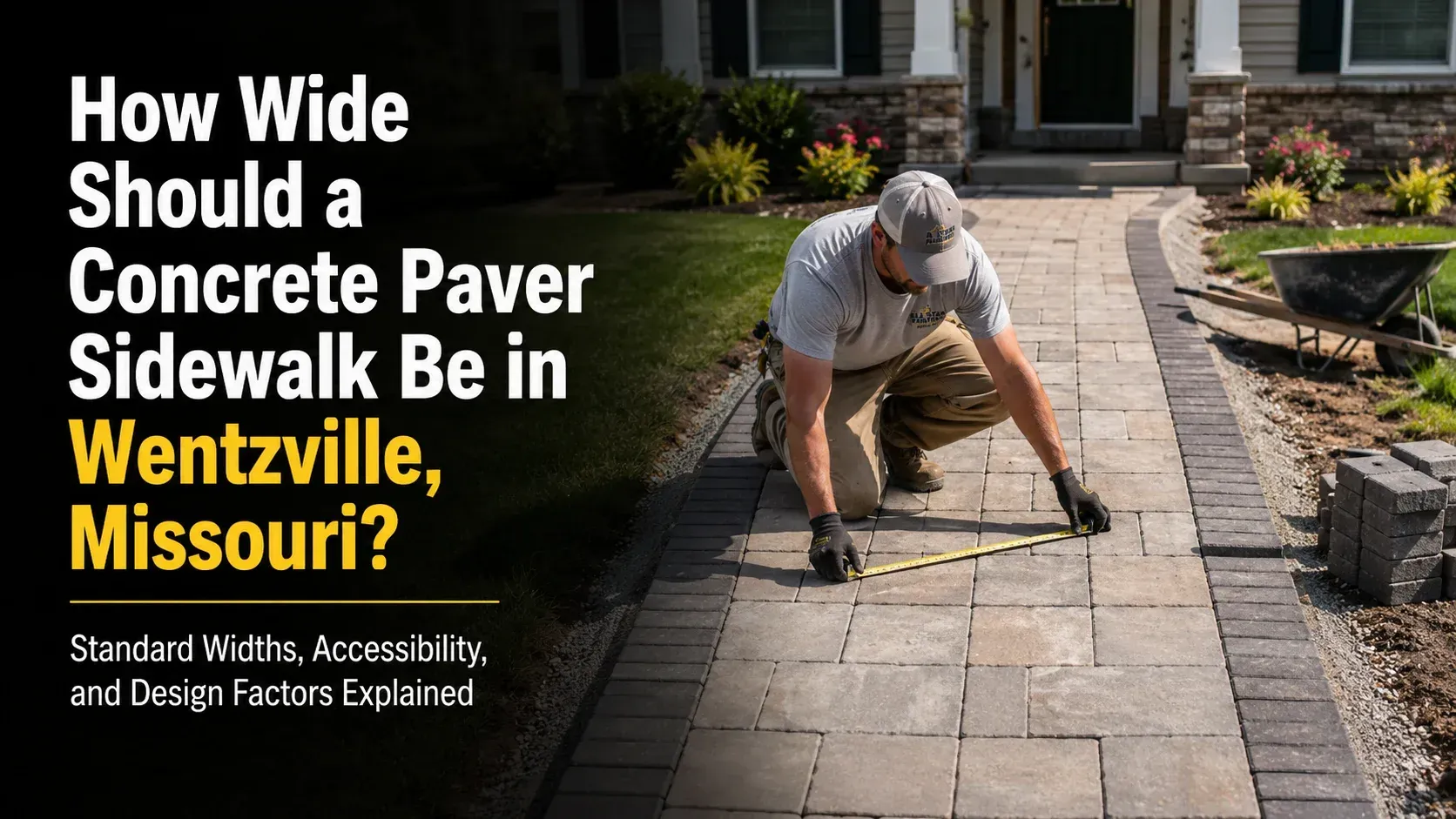
How Wide Should a Concrete Paver Sidewalk Be in Wentzville, Missouri?
Planning a new front or backyard path? These 10 concrete paver walkway designs range from sleek linear layouts to planted stepping-stone styles, giving modern Wentzville, MO homes a stylish, durable upgrade. Our paver installation team builds walkways made to last, and if you are reshaping the wider yard, our retaining wall ideas post pairs nicely with these designs.
A walkway is one of the first things guests notice, so it is worth doing well. The right concrete paver walkway adds curb appeal, guides foot traffic, and ties your landscape together. Here are ten designs to consider.
Caring for Your Paver Walkway
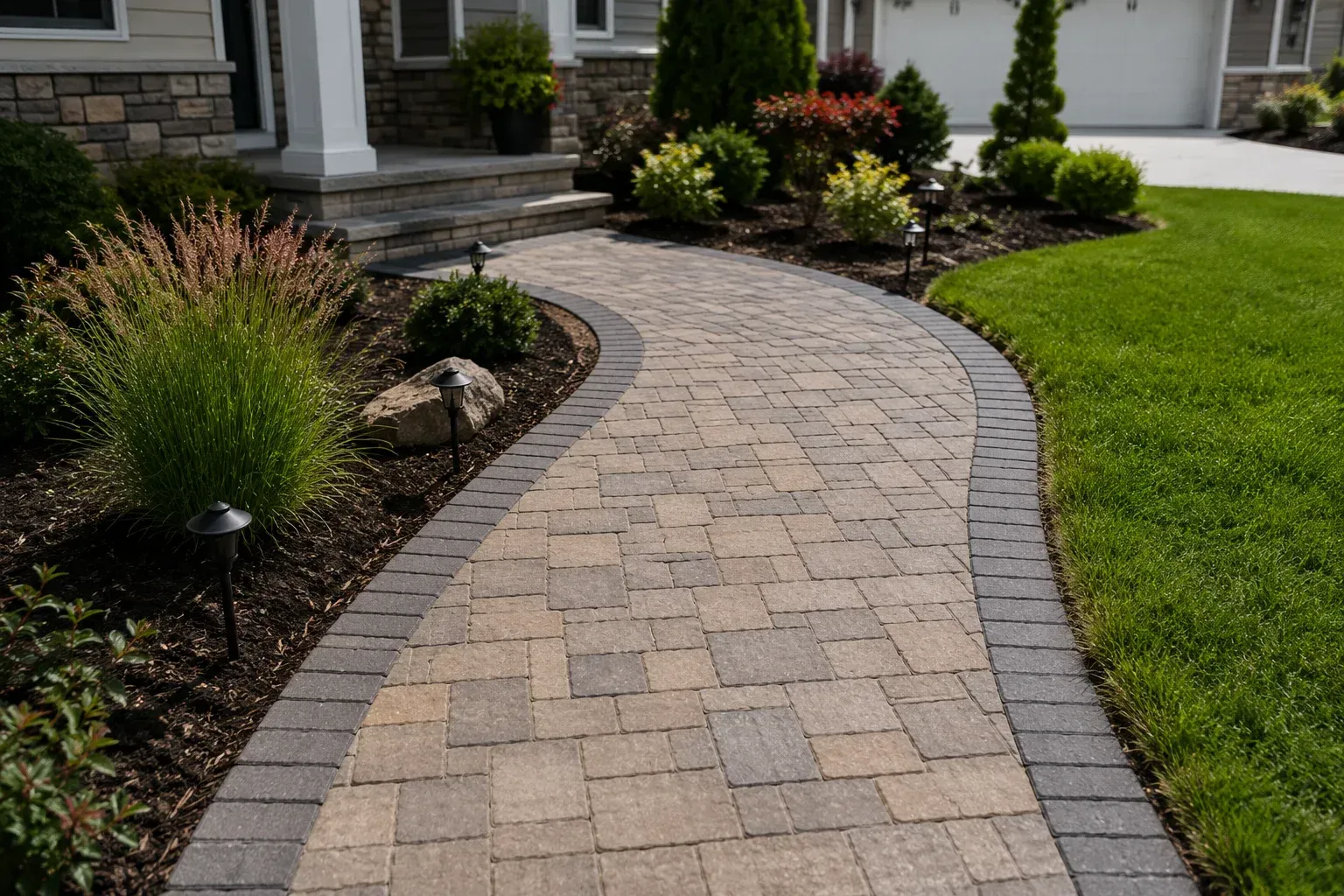
Table of Contents
- Introduction
- Standard Widths for a Concrete Paver Sidewalk
- Why Sidewalk Width Matters
- Width Guidelines by Walkway Type
- Accessibility and Passing Space
- Site Factors on Wentzville Properties
- Design Considerations Beyond Width
- Common Mistakes to Avoid
- Conclusion
- Talk Through Your Walkway Plans
- Frequently Asked Questions
Key Takeaways
- Most residential concrete paver sidewalks in Wentzville work best at 36 to 48 inches wide. That range fits one adult comfortably or lets two people pass with a little care.
- A width of 48 inches or more allows two people to walk side by side and gives strollers, wheelchairs, and lawn equipment room to move.
- Front entry walkways are usually built wider than side or garden paths because they carry more foot traffic.
- Property layout, slope, drainage, and how the walkway will actually be used matter as much as the number on the tape measure.
- Wentzville and St. Charles County may have their own rules for walkways near the public right of way, so confirm requirements before building.
Introduction
A concrete paver sidewalk in Wentzville, Missouri should be at least 36 inches wide, and 48 inches is the more practical target for most homes. That range gives one person room to walk without stepping into the grass and lets two people pass without turning sideways.
Width sounds like a small detail until the walkway is finished and paid for. A path that is too narrow feels cramped every day and is expensive to widen later. A path wider than the space calls for eats up yard, raises material cost, and can look out of scale next to a smaller home.
This guide covers the standard width ranges used in residential paver installation, how accessibility figures in, and the site conditions around Wentzville that can push a walkway wider or narrower. It is written for homeowners and business owners planning a new walkway or reworking an old one.
Standard Widths for a Concrete Paver Sidewalk
Residential walkway widths fall into a few well established ranges. These numbers come from long standing landscape design practice rather than a single rulebook, so treat them as starting points.
36 inches (3 feet). The common minimum for a functional walkway. One adult can walk it comfortably, and two can pass if one shifts to the edge. It suits side yards, garden paths, and light traffic routes.
42 inches (3.5 feet). A middle option that adds breathing room without a big jump in material. It works well for secondary paths that still get regular use, like the route from a driveway to a backyard gate.
48 inches (4 feet). The most common recommendation for front entry walkways. Two adults can walk side by side, and there is room for a stroller, wheelchair, or mower to travel without clipping the border.
60 inches (5 feet) and up. Suits larger homes, commercial entrances, and walkways that double as gathering space. Two wheelchairs can pass each other at 60 inches, which is why public sidewalks often use this figure.
Why Sidewalk Width Matters
Width affects how a walkway performs for decades. Pavers are a modular material, so the path is built once and expected to stay put. Adding a foot of width later means cutting into the lawn, matching pavers that may have weathered or been discontinued, and redoing edge restraint.
Width also affects drainage. A wider surface sheds more water toward its edges, which matters on the clay heavy soils common around St. Charles County. Clay drains slowly, so where that runoff goes has to be part of the plan.
Finally, width shapes how the property reads from the street. A generous front walk guides visitors and balances the house. A narrow ribbon of pavers leading to a large front door tends to look like an afterthought.
Width Guidelines by Walkway Type
Front Entry Walkways
The path to the front door carries the most traffic and the most visual weight. Most designers treat 48 inches as the working standard. If the home has a wide facade or a covered entry, 54 to 60 inches can keep the proportions balanced.
Side Yard and Utility Paths
Side paths are about movement, not appearance, and 36 inches is typically enough. It helps to measure the widest thing that will travel the route. A garbage cart or mower deck may need more clearance than a person does.
Garden and Backyard Paths
Informal paths through planting beds can drop to 30 or 36 inches because they are walked single file. Curved layouts feel natural at these widths, and the narrower footprint leaves more room for plants.
Walkways Connecting to Patios
A path that feeds into an outdoor seating area often looks best when it widens as it approaches. This is a common detail in
patio construction because it makes the transition feel intentional instead of abrupt.
Accessibility and Passing Space
Accessibility guidelines are a useful reference even on private property where they are not required. The ADA uses 36 inches as the minimum clear width for an accessible route, with wider passing areas at intervals. A continuous 48 inch width removes the need for separate passing zones in most residential settings.
If anyone in the household uses a walker, wheelchair, or cane, or if aging in place is part of the long term plan, the wider figure earns its cost. Surface choice matters too. Pavers with tight joints and a flat, non slip texture are easier to navigate than tumbled styles with wide gaps.
Slope is the other half of the picture. A walkway that gains height quickly may need a longer routing or landings to stay comfortable.
Site Factors on Wentzville Properties
Lot size and layout. Wentzville has a mix of newer subdivision lots and older properties with more land. On a compact lot, a 48 inch walk may crowd the foundation planting. On a larger lot, the same walk can look undersized.
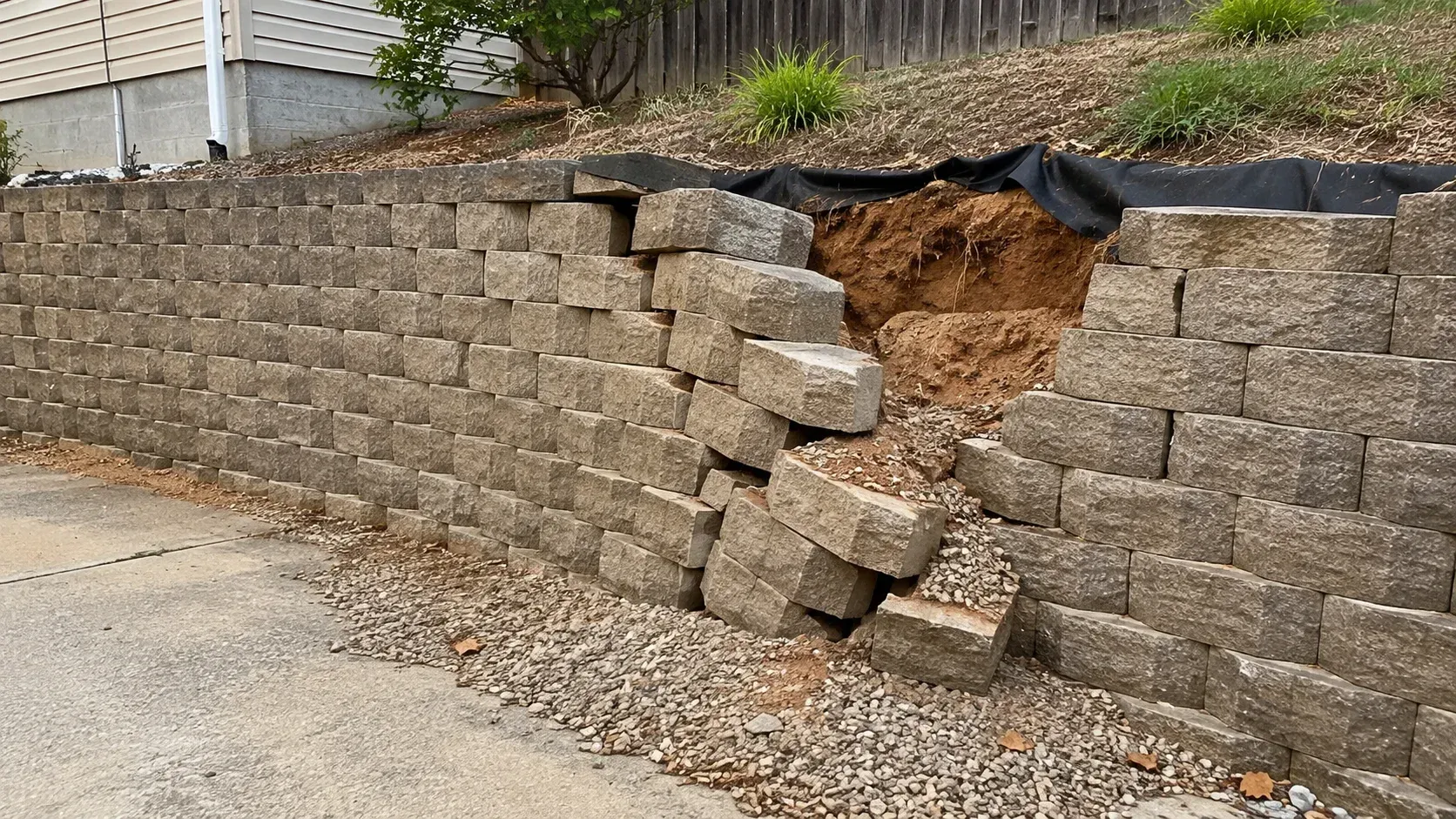
Slope and grading. Rolling terrain is common in parts of St. Charles County. A walkway crossing a slope may need steps, landings, or a small retaining edge. Landings are usually at least as wide as the path itself.
Drainage and soil. Clay soil holds water. A paver walkway needs a compacted base and a slight cross slope so water runs off rather than pooling in the joints.
Freeze and thaw cycles. Missouri winters push moisture in the ground through repeated freezing and thawing. Base depth and edge restraint do most of the work of keeping pavers flat through those cycles.
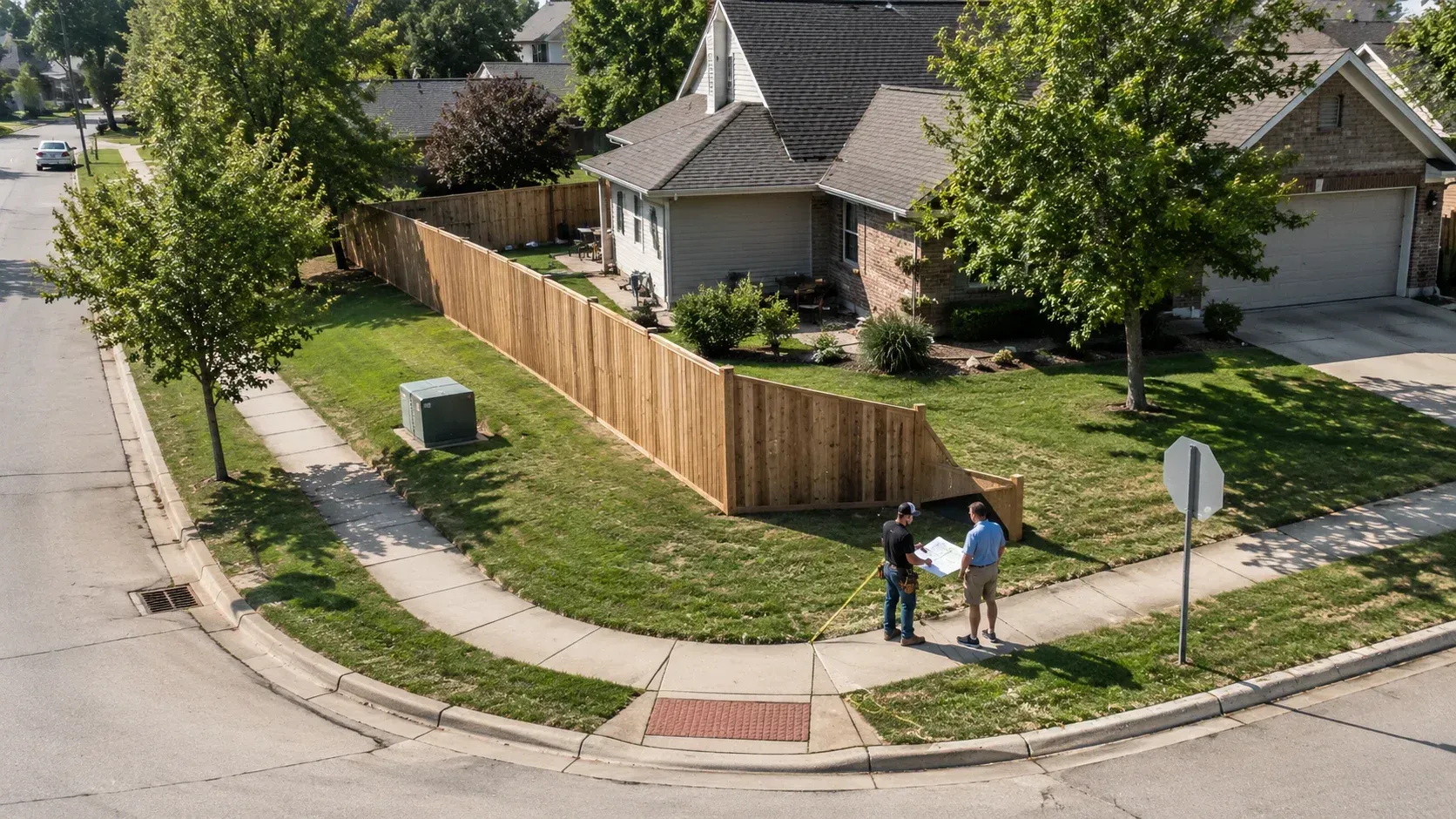
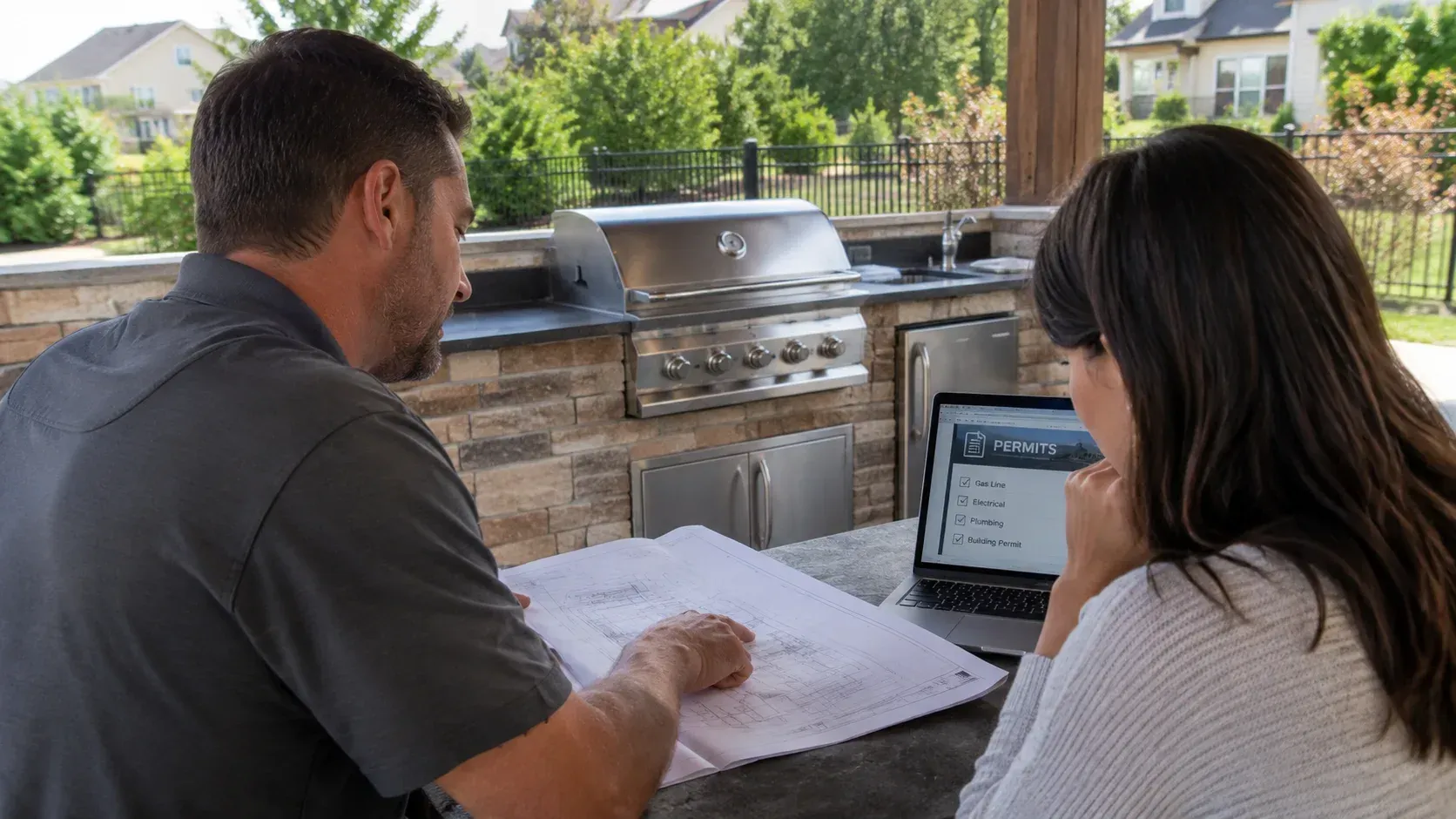
Local requirements. Walkways that connect to or sit near the public sidewalk or right of way may fall under city or county rules, and permit requirements vary by project. Confirm with the City of Wentzville or St. Charles County before finalizing a plan. It is cheaper to ask first than to rebuild later.
Intended use. A walkway that doubles as a route for trash carts, patio furniture, or mowers should be sized for the equipment, not just for feet.
Design Considerations Beyond Width
Width is one decision inside a larger concrete paver sidewalk design. A few related choices affect how the finished width actually feels.
Borders. A contrasting border row frames the path and visually tightens it, so account for the border in the total width.
Paver size and pattern. Large format pavers make a narrow path feel more open. Running bonds laid across the path, rather than along it, tends to make a walk feel wider.
Curves. Curved walkways feel relaxed and can work around trees and grade changes, but tight inside radiuses create pinch points. Keep the full design width through every curve.
Lighting and edging. Fixtures or raised edging inside the walkway footprint reduce usable width slightly, so add a few inches to compensate.
Common Mistakes to Avoid
The most frequent width mistake is building the minimum. A 36 inch front walk is functional on paper and disappointing in practice, especially once landscaping matures and leans into the path.
The second is ignoring what travels the route. Measuring the mower deck or trash cart takes two minutes and prevents years of awkward maneuvering.
The third is skipping the base to afford the width. A wide walkway over a thin, poorly compacted base will shift and heave through Missouri winters. If the budget forces a choice, a narrower path on a proper base outlasts a wide one on a bad base.
Conclusion
For most Wentzville homes, a concrete paver sidewalk between 36 and 48 inches wide covers the practical range, with 48 inches as the sensible default for front entries and 36 inches acceptable for side and garden paths. Accessibility needs, equipment clearance, lot proportions, slope, and drainage should all get a vote before the width is final.
None of these numbers are absolute rules. They are starting points that a site visit and honest questions about daily use will refine. Checking local requirements before work begins protects the investment, and matching the base preparation to Missouri's soil and weather protects it longer than any width decision will.
Talk Through Your Walkway Plans
If you are weighing widths, layouts, or materials for a walkway and want a second opinion grounded in local site conditions, a short conversation can help you sort the options before you commit to anything. You can reach out here with questions about your property, with no obligation attached to asking.
The goal is simply to help you make an informed decision about what fits your space, your budget, and how you use your yard.
Frequently Asked Questions
What is the minimum width for a concrete paver sidewalk?
36 inches is the widely used minimum for a residential walkway. It fits one adult comfortably. Anything narrower starts to feel like a stepping stone path rather than a sidewalk.
Is 48 inches too wide for a front walkway?
No. 48 inches is the most commonly recommended width for front entries because it allows two people to walk side by side and accommodates strollers and wheelchairs. On a very small home it can look oversized, which is a proportion question rather than a function one.
Do I need a permit to install a paver sidewalk in Wentzville?
It depends on the project. Walkways entirely on private property often have fewer requirements than those connecting to public sidewalks or the right of way. Check with the City of Wentzville or St. Charles County before starting, since rules vary and can change.
How wide should a walkway be for wheelchair access?
36 inches is the minimum clear width referenced in ADA guidance, with 48 inches providing comfortable continuous access and 60 inches allowing two wheelchairs to pass. On private property these figures are guidance rather than law, but they are a sound benchmark.
Does Missouri weather affect how a paver sidewalk should be built?
Yes. Freeze and thaw cycles and slow draining clay soil both put stress on pavers. A compacted gravel base of adequate depth, proper edge restraint, and a slight cross slope for drainage matter more to long term performance than the pavers themselves.