
What Causes a Retaining Wall to Fail in Wentzville, Missouri?
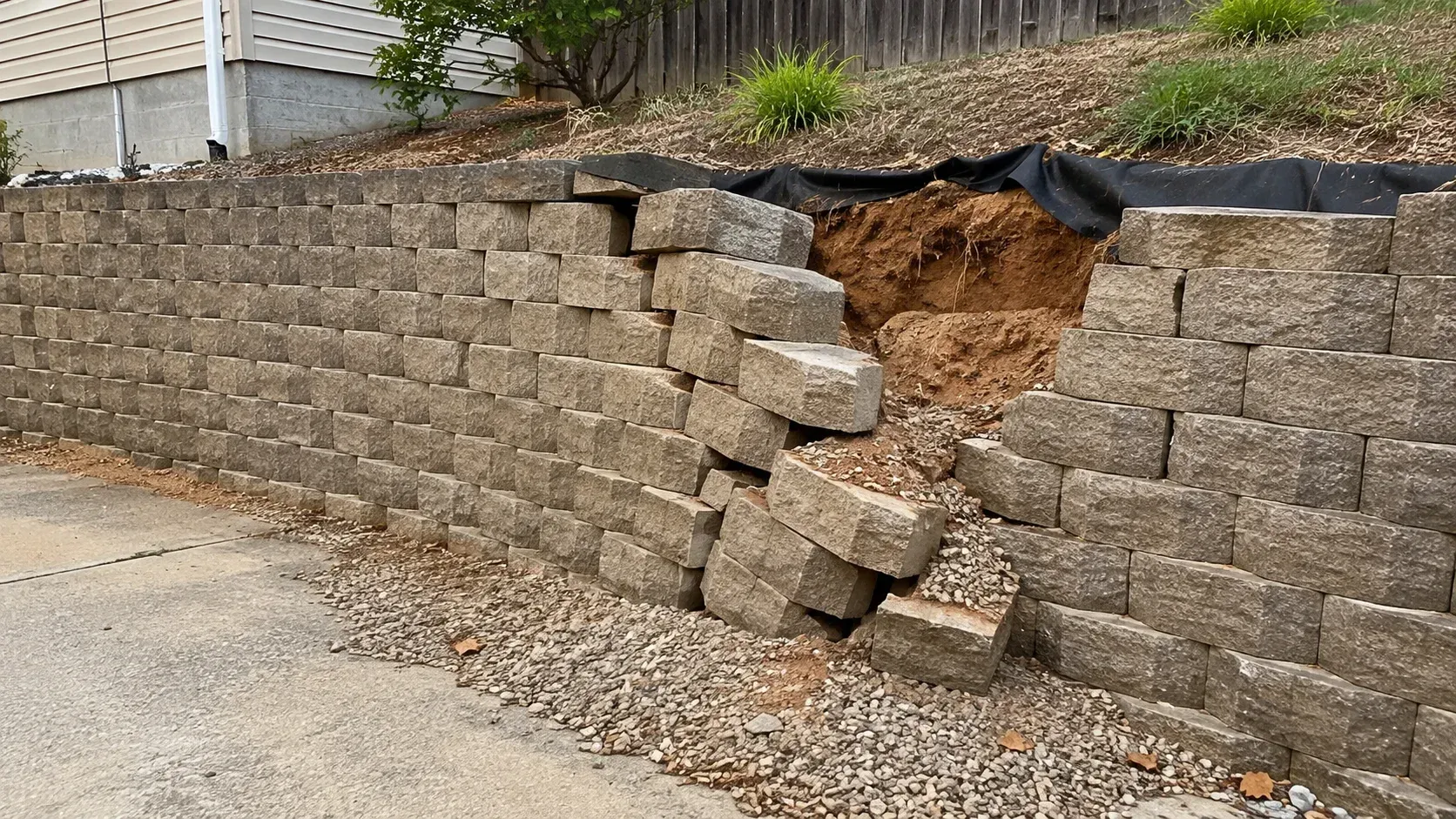
Table of Contents
- Introduction
- The Short Answer: Water and Pressure
- Poor Drainage Behind the Wall
- Soil Pressure and Missouri Clay
- Improper Construction and Skipped Steps
- Foundation and Base Movement
- Early Warning Signs to Watch For
- Prevention and Maintenance
- When to Call a Professional
- Conclusion
- Talk Through Your Wall's Condition
- Frequently Asked Questions
Key Takeaways
- Most retaining wall failures in Wentzville trace back to water. Poor drainage builds pressure behind the wall until it leans, cracks, or bulges.
- Missouri's clay soil swells when wet and shrinks when dry, and that constant movement puts steady stress on any wall that was not built to handle it.
- Skipped construction steps, such as no gravel backfill, no drainage pipe, or a weak base, are common causes that are hidden until the wall starts to move.
- Early warning signs include leaning, cracking, bulging, separating blocks, and soil or water escaping at the base.
- Catching movement early usually means a smaller, less costly repair, while ignoring it can lead to full replacement.
Introduction
A retaining wall fails mainly because of water and pressure. When water collects in the soil behind a wall and cannot drain, it adds weight and force that push the wall forward until it leans, cracks, or gives way. Poor drainage, heavy clay soil, and skipped construction steps are the causes behind most failures in the Wentzville area.
For a homeowner, a failing wall is more than a cosmetic problem. A wall that gives way can damage a yard, a driveway, or a foundation, and repairs get more expensive the longer movement goes unaddressed. Understanding the causes helps you spot trouble early and decide what to do.
This article explains why walls fail, what warning signs to look for, and when the situation calls for professional retaining wall repair. It is written for homeowners and property owners around Wentzville and St. Charles County.
The Short Answer: Water and Pressure
Nearly every retaining wall failure comes down to one force: the pressure of soil and water pushing against the back of the wall. Engineers call this lateral earth pressure.
A dry, well drained soil pushes with a manageable, predictable force. Add water that cannot escape, and that force climbs sharply, because saturated soil is heavier and behaves almost like a liquid. The rest of this article is really a list of the different ways water and pressure get the upper hand.
Poor Drainage Behind the Wall
Drainage is the single most common cause of failure. A retaining wall holds back soil, and that soil holds water after rain and snowmelt. If the water has no way out, it builds up behind the wall.
This buildup is called hydrostatic pressure. It grows with every inch of trapped water and pushes steadily on the back of the wall. Over time it can make a wall lean, bow, or crack even if the wall itself was well built.
Proper retaining wall drainage relies on a few features working together: a layer of gravel backfill behind the wall, a perforated drain pipe at the base, and weep holes or outlets that let water escape. When any of these are missing or clogged, pressure has nowhere to go.
Clogging is easy to overlook. A drain pipe packed with silt or roots stops working, and the wall starts collecting water again years after it was built.
Soil Pressure and Missouri Clay
Much of Wentzville and St. Charles County sits on clay heavy soil, and clay behaves in a way that is hard on retaining walls. It swells when it takes on water and shrinks when it dries out.
That swelling and shrinking is not a one time event. It happens every wet and dry season, and the repeated movement works against the wall a little more each cycle.
Clay also drains slowly, which makes the drainage problem above worse. Water lingers in clay long after it would have passed through sandy soil, so pressure stays high for longer.
Freeze and thaw cycles add to this. Water in the soil expands as it freezes in winter, pushing on the wall, then thaws and refreezes through the season.
Improper Construction and Skipped Steps
A wall can fail simply because it was not built correctly. These problems are invisible at first, since a new wall looks fine whether or not the hidden steps were done right.
Common construction shortcomings include:
- No gravel backfill or drain pipe. Without these, water is trapped behind the wall from day one.
- A weak or shallow base. A retaining wall needs a compacted gravel base of proper depth. Build it on loose dirt and the wall settles unevenly.
- No batter or setback. Taller walls should lean slightly back into the slope or step back with each course. A dead vertical wall has less resistance to the soil behind it.
- Wrong wall for the height. Tall walls, generally those over three or four feet, often need engineering, reinforcement, or a tiered design. A block wall built too tall for its type is prone to failure.
Solid retaining wall construction treats the base, the backfill, and the drainage as the core of the job, not as extras.
Foundation and Base Movement
Even a well built wall can move if the ground beneath it shifts. The base is the foundation of the whole structure, and it has to stay stable for the wall above it to hold.
Erosion is one cause. Water running along the bottom of a wall can wash away the soil supporting the base, leaving sections unsupported.
Settling is another. If the base was not compacted evenly, parts of the wall sink faster than others, which twists the structure and opens cracks or gaps between blocks.
Nearby activity can play a role too. Heavy vehicles parked close to the top of a wall, added fill dumped behind it, or a new structure built above it all raise the load the wall was not designed to carry.
Early Warning Signs to Watch For
Walls rarely fail without warning. The signs usually appear months or years before a collapse, which is why regular looks pay off. Watch for these:
- Leaning or tilting. A wall pulling away from vertical is under more pressure than it can handle.
- Cracks. Vertical or stair step cracks in the face signal stress or uneven settling.
- Bulging or bowing. A section pushing outward means pressure is concentrated there.
- Separating or shifting blocks. Gaps opening between units point to movement.
- Soil or water at the base. Mud, standing water, or soil washing out at the bottom suggests a drainage problem in progress.
One sign alone may be minor. Several together, or any sign that worsens over a few weeks, is a reason to look closer.
Prevention and Maintenance
Most failures are preventable, and maintenance is far cheaper than repair. A few simple habits protect a wall over time.
Keep drainage outlets and weep holes clear of dirt, mulch, and leaves so water can escape. Direct downspouts and surface runoff away from the top of the wall rather than toward it.
Avoid piling extra soil, heavy planters, or parked vehicles near the top edge, since these add load. Check the wall after heavy storms and each spring, and note anything that has changed since the last look.
Landscaping helps too. Plants with modest root systems can hold surface soil in place, though large trees planted too close can do the opposite as their roots grow.
When to Call a Professional
Small cosmetic cracks in a low garden wall are often not urgent. Movement is different. A wall that is leaning, bulging, or shifting is telling you the forces on it have won, and those issues rarely fix themselves.
A professional can look at the whole picture: the drainage, the base, the soil, and the wall type, and identify the actual cause rather than just the symptom. That matters, because patching a crack without fixing the drainage behind it usually just delays the next problem.
Getting an assessment early tends to mean a smaller repair. Waiting until a wall is close to collapse often turns a repair into a full rebuild.
Conclusion
Retaining walls in Wentzville fail mostly because of water and the pressure it creates, made worse by clay soil that swells, shrinks, and drains slowly.
Poor drainage, skipped construction steps, and an unstable base are the usual causes, and each one lets soil pressure build until the wall leans, cracks, or bulges.
The practical takeaway is to watch for early signs and treat drainage as the heart of the matter. Leaning, cracking, bulging, and soil escaping at the base are all cues to look closer. Addressing movement early, and understanding the cause rather than just the symptom, gives a property owner the clearest path to a sound decision about repair or replacement.
Talk Through Your Wall's Condition
If you have noticed a lean, a crack, or water pooling near a wall and want help understanding what is going on, a professional assessment can identify the cause before you commit to any fix. You can contact us with questions about your wall at any point, with no pressure and no obligation. The goal is to give you clear, honest information so you can decide what makes sense for your property.
Frequently Asked Questions
What is the most common cause of retaining wall failure?
Poor drainage is the most common cause. When water builds up behind a wall and cannot escape, it creates hydrostatic pressure that pushes the wall forward until it leans, cracks, or bulges.
How do I know if my retaining wall is failing?
Look for leaning or tilting, cracks in the face, bulging sections, gaps opening between blocks, and soil or water escaping at the base. One minor sign may not be urgent, but several together, or any that worsen, are worth a closer look.
Why do retaining walls fail in Missouri specifically?
Much of the region has clay heavy soil that swells when wet and shrinks when dry, and it drains slowly. Combined with freeze and thaw cycles, this puts repeated pressure on walls, which makes proper drainage and construction especially important here.
Can a leaning retaining wall be repaired, or does it need replacing?
It depends on how far it has moved and why. A wall caught early, with a sound base, may be repairable by improving drainage and resetting sections. A wall that has shifted significantly or has a failing base often needs rebuilding. A professional assessment can tell the difference.
How can I prevent my retaining wall from failing?
Keep drainage outlets clear, direct downspouts and runoff away from the wall, avoid adding heavy loads near the top, and check the wall after heavy storms and each spring. Good drainage and light maintenance prevent most failures.
Does a retaining wall need a drain pipe?
Most walls holding back a meaningful amount of soil benefit from a perforated drain pipe at the base along with gravel backfill and weep holes. These features give trapped water a way out and are a key defense against pressure buildup.
How long should a retaining wall last?
Lifespan varies with materials, construction quality, soil, and drainage, so there is no fixed number. A properly built and drained wall can last for decades, while one with poor drainage or a weak base may show problems within a few years.