
Walkway Patio Design Ideas for Homes in St. Charles County, MO
Planning a new front or backyard path? These 10 concrete paver walkway designs range from sleek linear layouts to planted stepping-stone styles, giving modern Wentzville, MO homes a stylish, durable upgrade. Our paver installation team builds walkways made to last, and if you are reshaping the wider yard, our retaining wall ideas post pairs nicely with these designs.
A walkway is one of the first things guests notice, so it is worth doing well. The right concrete paver walkway adds curb appeal, guides foot traffic, and ties your landscape together. Here are ten designs to consider.
Caring for Your Paver Walkway
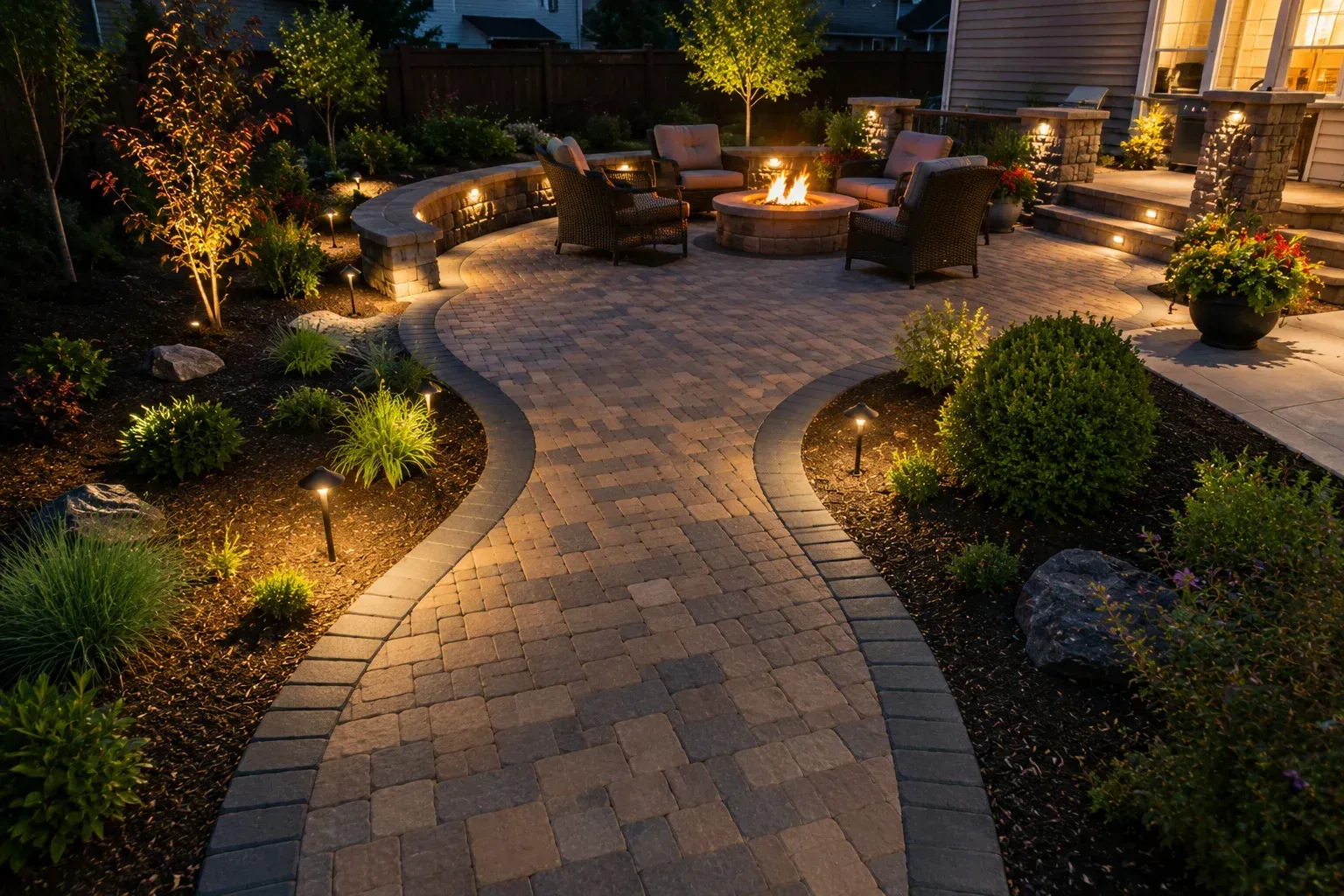
Table of Contents
- Popular Walkway and Patio Layouts
- Choosing Paver Materials for Missouri Weather
- Color Combinations That Age Well
- Connecting the Walkway to the Patio
- Landscaping Features That Complete the Design
- Designing for Durability on Local Soil
- Budget and Planning Considerations
- Conclusion
- Plan Your Outdoor Space With Confidence
- Frequently Asked Questions
Key Takeaways
- The most reliable walkway patio design ideas for St. Charles County homes pair a defined patio zone with a connecting path that matches it in material and color, so the two read as one space.
- Concrete pavers are the most common material choice locally because they handle Missouri freeze and thaw cycles well and individual units can be replaced if one cracks or settles.
- Earth tone color blends in tan, gray, and brown tend to age better than bold single colors and hide dust, pollen, and water spots between cleanings.
- Curved walkways, border courses, and simple planting beds do more for curb appeal than complicated patterns, and they cost less to build and maintain.
- Drainage and base preparation decide how long any design lasts. The best looking layout will fail early on clay soil if water has nowhere to go.
Introduction
The walkway patio design ideas that work best in St. Charles County pair a defined patio area with a connecting path built from the same or complementary pavers, tied together with borders, curves, and simple plantings. Popular local combinations include earth tone paver patios with curved front walkways, circular fire pit patios reached by a stepping path, and covered seating areas linked to the driveway by a wide, straight walk.
Design choices here matter more than in milder climates. St. Charles County sits on clay heavy soil and goes through hot, humid summers and freezing winters, so a layout that ignores drainage or material behavior will show it within a few seasons.
This guide walks through layouts, materials, colors, and landscaping details that suit homes in Wentzville and the surrounding county, along with the practical limits of each idea. It is written for homeowners and business owners planning a new patio, walkway, or a full outdoor living project.
Popular Walkway and Patio Layouts
The Classic Rectangle With a Straight Walk
A rectangular patio off the back door with a straight connecting walkway is the most common layout for a reason. It is efficient to build, easy to furnish, and fits most subdivision lots. The tradeoff is that it can feel plain without a border course or planting bed to soften the edges.
Curved Patio With a Winding Path
Curved edges suit larger yards and homes with mature trees. A walkway that bends around a tree or planting bed slows the walk and makes a modest yard feel bigger. Curves add cutting waste and labor, so expect a higher cost per square foot.
Circular Fire Pit Patio
A round patio built around a fire pit has become a staple of outdoor living design in the St. Louis region because it extends the season into fall. It works best as a destination, set away from the house and reached by a path, rather than pressed against the back wall.
Multi Level Patio
Sloped lots, which are common across the county's rolling terrain, often call for two patio levels joined by wide steps. A low seat wall or small retaining edge holds the grade change. This layout costs more but turns a slope from a problem into a feature.
Wraparound Walkway
A path that runs from the driveway around the side of the house to the back patio solves a daily annoyance: tracking through the garage or house to reach the yard. Keep it at least 36 inches wide, and wider if mowers or carts will use it.
Choosing Paver Materials for Missouri Weather
Concrete pavers dominate patio and walkway designs in this area, and the reasons are practical. They are manufactured to handle freeze and thaw cycles, they come in dozens of shapes and blends, and a single damaged unit can be lifted and replaced without tearing out the surface around it.
Natural stone, such as flagstone or bluestone, offers a look pavers cannot fully copy. It costs more, the irregular pieces take longer to lay, and some stones flake in freezing weather, so the type matters as much as the look.
Stamped concrete is a lower cost alternative, but it is one continuous slab. When Missouri's clay soil moves, a slab cracks, and cracks in stamped concrete cannot be repaired invisibly. Pavers flex with the ground instead.
Whatever the surface, quality
paver installation depends on what sits underneath: a compacted gravel base, a bedding layer, and solid edge restraint. The surface material gets the attention, but the base does the work.
Color Combinations That Age Well
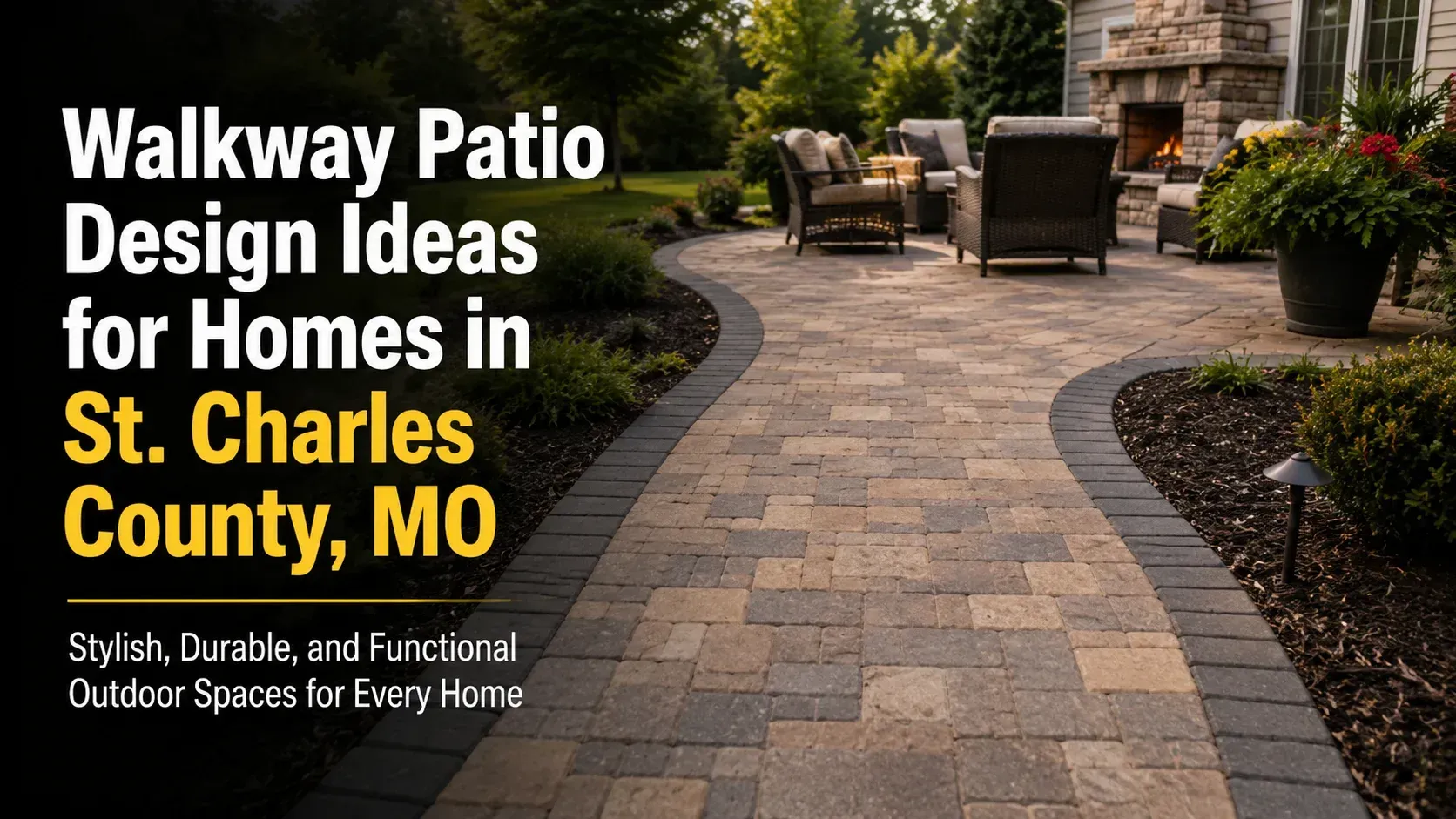
Bold, single color surfaces show every leaf stain, water spot, and streak of pollen. Blended earth tones hide daily wear far better, which is why they dominate patio and walkway designs across the county.
A few pairings that hold up well:
- Tan and brown blends with a charcoal border. The border frames the space and matches most brick and vinyl siding common in local subdivisions.
- Gray blends with a light gray or cream accent. These suit newer homes with white, gray, or black exteriors and keep the space feeling bright.
- Red and brown blends near brick homes. Pulling one tone from the house brick into the pavers ties the hardscape to the architecture without matching it exactly.
Pick colors against the house in daylight, not from a catalog. Pavers read differently in sun, shade, and rain, so a sample laid on site removes most of the guesswork.
Connecting the Walkway to the Patio
A walkway and patio built from unrelated materials look like two separate projects. The simplest fix is to use the same paver in both, or the same paver family in a different size, so the path reads as an approach to the patio rather than an accident.
Widening the walkway where it meets the patio makes the transition feel deliberate. So does carrying the patio's border course along both edges of the path. These details are common in professional patio construction because they cost little and do a lot of visual work.
Lighting belongs in this conversation too. Low voltage path lights make the route usable after dark and are far easier to wire during construction than after.
Landscaping Features That Complete the Design
Hardscape and planting work together. A patio surrounded by bare lawn feels exposed, while a few well placed beds anchor it.
- Planting beds along the walkway. Low shrubs or perennials on one side of a path soften the line without hiding it. Native plants such as coneflower and little bluestem handle local summers with less watering.
- Seat walls. A knee high wall on one edge of a patio doubles as extra seating and gives the space a boundary.
- Fire features and outdoor kitchens. A fire pit is the most common add on. Larger projects fold in a grill island or full outdoor kitchen, which changes the layout math because appliances need clearance, utilities, and a work zone away from seating.
- Shade. Missouri summers are hot. A pergola, a shade sail, or simply siting the patio on the east side of the house makes the space usable in July, not just in April and October.
Designing for Durability on Local Soil
Most of St. Charles County sits on clay soil that swells when wet and shrinks when dry. Combined with freeze and thaw cycles, that movement is the main threat to any hardscape.
Three design decisions matter most. First, slope every surface slightly away from the house, roughly a quarter inch per foot, so water drains off rather than pooling. Second, insist on a properly compacted gravel base of adequate depth for the soil, not a thin layer of sand over dirt. Third, use edge restraint on every border so pavers cannot creep outward over time.
Polymeric sand in the joints helps resist weeds and washout, though it needs occasional topping up. None of these items show up in a photo, and all of them decide whether the design still looks right in ten years.
Budget and Planning Considerations
Costs vary widely with size, material, site access, and grade, so treat any per square foot number as a rough guide rather than a quote. Curves, multiple levels, seat walls, and lighting each add cost, and sloped sites need more base work than flat ones.
It also pays to plan the full layout even if the budget only covers part of it now. Building the patio this year and the walkway next year works fine when both were designed together. A path bolted on later usually shows.
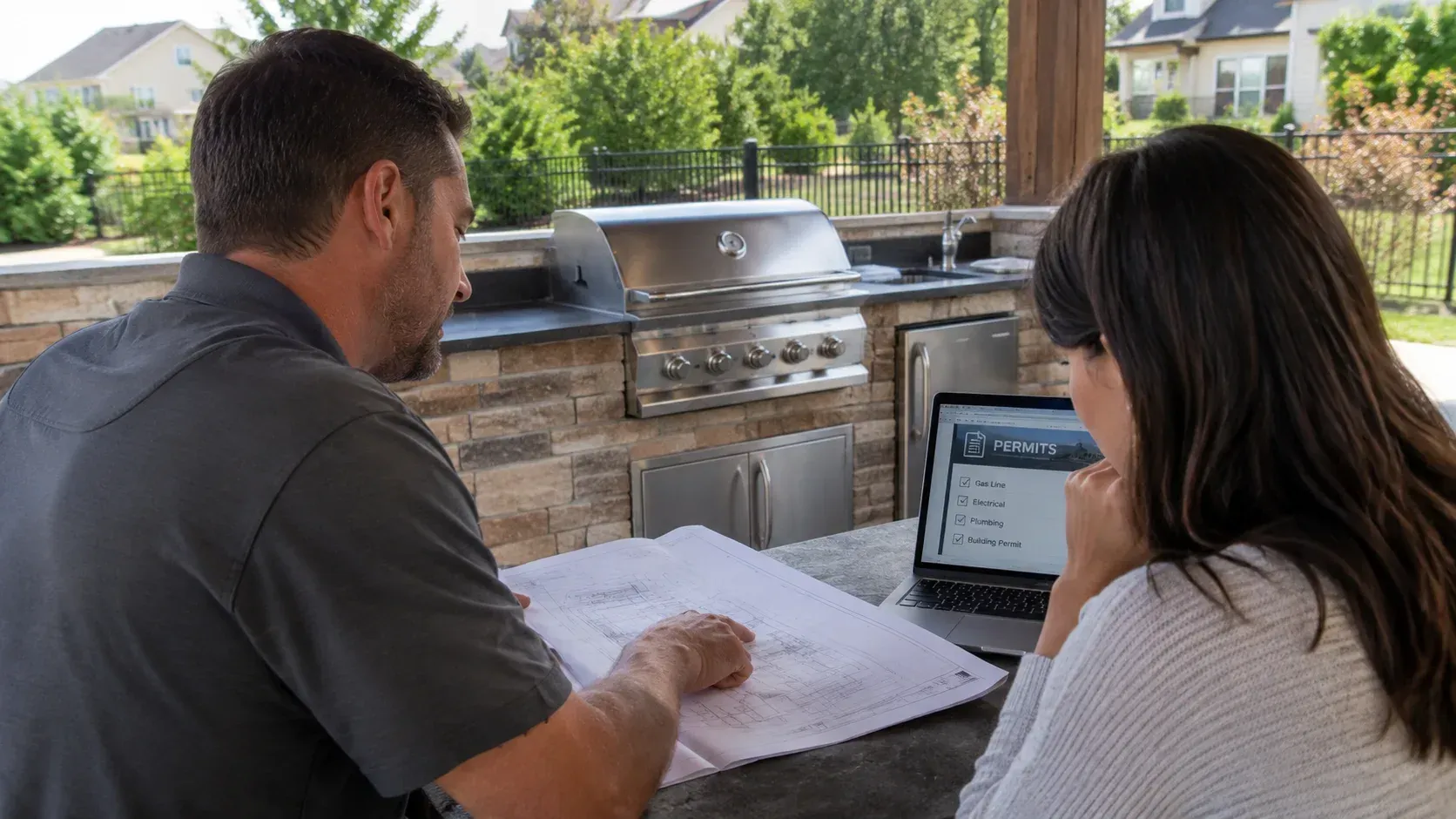
Check whether your project needs a permit. Requirements differ between Wentzville, O'Fallon, St. Peters, and unincorporated St. Charles County, and structures like pergolas or kitchens often have rules that plain patios do not.
Conclusion
Strong walkway patio design ideas for St. Charles County homes share a few traits: a patio and path built from matching or related pavers, earth tone blends that age gracefully, borders and curves used with restraint, and plantings that frame the space. Layout options range from a simple rectangle with a straight walk to multi level patios and fire pit destinations, and each carries its own cost and site requirements.
The less visible decisions carry the most weight. Drainage, base preparation, and edge restraint determine how any of these ideas perform on local clay soil through Missouri winters. A design chosen with those limits in mind, and with permits confirmed up front, gives a homeowner a realistic picture of cost and longevity before the first paver is set.
Plan Your Outdoor Space With Confidence
If you are gathering ideas and want help thinking through what fits your lot, your soil, and your budget, a short conversation about your property can bring the options into focus. You can ask a question about your project at any stage, with no pressure and no obligation.
The aim is simply to give you clear, honest information so you can decide what makes sense for your home.
Frequently Asked Questions
What is the most popular patio design in St. Charles County?
Rectangular paver patios in tan, gray, or brown blends with a contrasting border are the most common, usually connected to the driveway or door by a matching walkway. Circular fire pit patios are a close second for backyards.
Should my walkway match my patio?
They do not need to be identical, but they should be related. Using the same paver in a different size, or repeating the patio's border color along the walkway, ties the two together and makes the yard feel planned.
How do I keep a paver patio from shifting or sinking?
The main defenses are a compacted gravel base of proper depth, edge restraint around the perimeter, a slight slope for drainage, and jointing sand that stays topped up. Most settling problems trace back to a base that was too thin or poorly compacted.
Do I need a permit for a patio or walkway in St. Charles County?
It depends on the municipality and the project. Ground level patios often have fewer requirements than structures like pergolas, kitchens, or retaining walls. Check with your city or the county before building, since rules vary and change.
What plants work well next to walkways and patios here?
Natives such as coneflower, black eyed Susan, and little bluestem handle Missouri summers with modest care. Low shrubs like boxwood or dwarf hydrangea give structure without overhanging the path.